Hey everyone! I’m a supplier of valve balls, and I’ve been in this business for quite a while. One question I get asked a lot is how to select the right material for valve balls based on the application. It’s a crucial decision because the wrong material can lead to all sorts of problems, like leakage, corrosion, or even failure of the valve system. So, I thought I’d share some of my knowledge and experience on this topic. Valve Balls
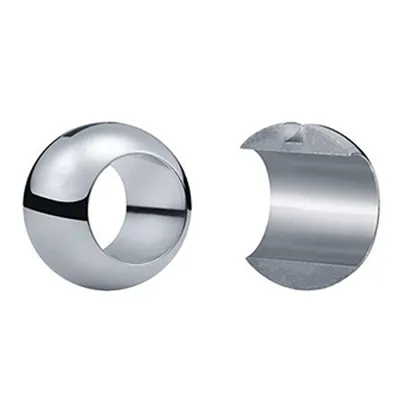
Let’s start by understanding why choosing the right material is so important. Valve balls are a key component in valve systems. They control the flow of fluids or gases by opening and closing the valve. Different applications have different requirements, such as pressure, temperature, and the type of fluid or gas being handled. The material of the valve ball needs to be able to withstand these conditions without degrading or failing.
1. Consider the Type of Fluid or Gas
The first thing to think about is what kind of fluid or gas the valve will be handling. Is it a corrosive chemical, like hydrochloric acid? Or is it a clean, inert gas, like nitrogen?
- Corrosive Fluids: If you’re dealing with corrosive fluids, you need a material that can resist corrosion. Stainless steel is a popular choice because it has a good balance of corrosion resistance, strength, and cost. For example, 316 stainless steel contains molybdenum, which gives it better resistance to pitting and crevice corrosion in chloride environments. It’s commonly used in the chemical and marine industries.
If the corrosion is really severe, you might want to consider exotic materials like Hastelloy or titanium. Hastelloy is a nickel – based alloy that offers excellent resistance to a wide range of corrosive chemicals, including sulfuric acid and hydrochloric acid. Titanium is also very corrosion – resistant, especially in oxidizing environments. It’s often used in the aerospace and desalination industries.
- Clean Fluids or Gases: For clean fluids or gases, you have more flexibility in material selection. Carbon steel can be a good option if cost is a major concern and the operating conditions are relatively mild. It has good strength and is easy to machine. For high – purity applications, like in the pharmaceutical or food and beverage industries, you’ll want a material that won’t contaminate the product. Stainless steel is also a great choice here, or you might use a plastic – lined valve ball. PTFE (polytetrafluoroethylene), for instance, is non – reactive, has a low friction coefficient, and is suitable for a wide range of temperatures.
2. Evaluate the Pressure and Temperature Conditions
The pressure and temperature at which the valve will operate are also critical factors.
-
High – Pressure Applications: When dealing with high pressures, you need a material that can withstand the force without deforming. Metals, especially high – strength alloys, are usually the best choice. For example, forged stainless steel or alloy steel can provide the necessary strength. These materials have high yield and tensile strengths, which means they can handle the stress of high – pressure fluid or gas flow.
-
High – Temperature Applications: At high temperatures, the material’s properties can change. It might expand, lose strength, or become more prone to corrosion. For high – temperature applications, you need a material with good thermal stability. Inconel is a nickel – chromium alloy that retains its strength at high temperatures and is resistant to oxidation. It’s commonly used in applications like power generation, where the valves are exposed to high – temperature steam.
On the other hand, if the temperature is very low, you need to consider the material’s ductility and toughness at cryogenic temperatures. Stainless steel grades like 304L and 316L are often used in cryogenic applications because they remain ductile at low temperatures and won’t become brittle.
3. Think About Wear and Abrasion Resistance
If the fluid or gas contains solid particles, the valve ball will be subject to wear and abrasion. In such cases, you need a hard and wear – resistant material.
-
Ceramic Valve Balls: Ceramics are extremely hard and have excellent wear resistance. They can withstand the erosive action of solid particles in the fluid or gas. For example, alumina ceramic valve balls are used in slurry applications, where the fluid contains a high concentration of solid particles. However, ceramics are brittle, so they need to be handled carefully during installation and operation.
-
Tungsten Carbide: Tungsten carbide is another hard and wear – resistant material. It has a high hardness and toughness, which makes it suitable for applications where there is a lot of abrasion. It’s often used in oil and gas wells, where the fluid contains sand and other abrasive particles.
4. Cost Considerations
Let’s face it, cost is always a factor in any material selection. You want to get the best material for the job, but you also don’t want to break the bank.
-
Budget – Friendly Options: As mentioned earlier, carbon steel is one of the most cost – effective materials for valve balls. It’s widely available and relatively inexpensive. If your application allows for it, carbon steel can be a great choice. Plastic materials like PVC (polyvinyl chloride) and PP (polypropylene) are also cheap and can be used in some low – pressure and non – corrosive applications.
-
Investment in Quality: For more demanding applications, you may need to invest in higher – quality materials. While exotic alloys like Hastelloy and Inconel are more expensive, they offer long – term reliability and performance. In the long run, the cost of using a cheaper but less suitable material can be much higher due to frequent replacements and maintenance.
5. Compatibility with Other Components
The valve ball doesn’t work in isolation. It needs to be compatible with other components in the valve system, such as the valve seat and the body.
- Material Matching: The material of the valve ball and the valve seat should be selected so that they have good sealing properties and don’t cause excessive wear on each other. For example, if you’re using a stainless – steel valve ball, a compatible seat material could be a soft elastomer like EPDM (ethylene propylene diene monomer) for low – pressure applications, or a harder material like PEEK (polyether ether ketone) for high – pressure and high – temperature applications.

In conclusion, selecting the right material for valve balls based on the application is a complex but important decision. You need to consider the type of fluid or gas, the pressure and temperature conditions, wear and abrasion resistance, cost, and compatibility with other components. As a valve ball supplier, I’m here to help you make the best choice. If you’re in the market for valve balls and need some advice on material selection, or if you want to discuss a potential purchase, feel free to reach out. I’d be more than happy to have a chat and see how I can meet your needs.
By Material References
- ASM Handbook Volume 13: Corrosion
- Valve Handbook by Robert W. McKetta
Zhejiang Jigong Valve Co., Ltd.
Zhejiang Jigong Valve Co., Ltd. is one of the most professional valve balls manufacturers and suppliers in China, also supports customized service with low price. Please feel free to wholesale durable valve balls made in China here from our factory. For quotation, contact us now.
Address: Dongou Industrial Park, Oubei Subdistrict, Yongjia County, Wenzhou City, Zhejiang Province (within Zhejiang Yinhe Machinery Manufacturing Co., Ltd.)
E-mail: Sales@cnzjsk.com.cn
WebSite: https://www.ball-china.com/
