As an EDI and CEDI equipment supplier who’s spent the last 12 years working directly with hospitals, dialysis centers, and regulatory teams, I’ve lost count of the times customers have pulled me aside at trade shows or called my office at 2 a.m. because they’re stuck on certification hurdles for new equipment. It’s not just about checking a box—cutting corners here can put patient safety at risk, delay life-saving treatments, and cost a clinic tens of thousands of dollars in fines. When I first started in this industry 18 years ago, certification felt like a vague, confusing list of hoops to jump through. Now, after helping dozens of facilities navigate the process, I can tell you it’s a structured, non-negotiable step that ensures every piece of EDI equipment works as intended, in environments that matter most. EDI and CEDI Equipment
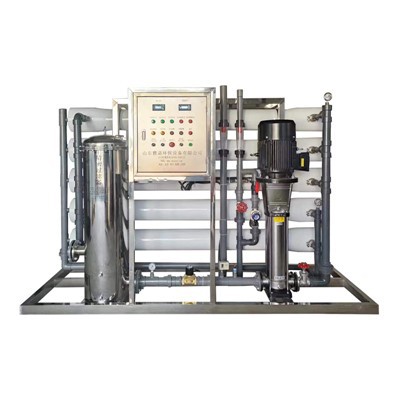
Let’s start with the basics: EDI, or Extracorporeal Dialysis Equipment, and CEDI, Continuous Renal Replacement Therapy (a subset of EDI for critically ill patients), are medical devices designed to filter blood when a patient’s kidneys can’t. These aren’t office printers or warehouse tools—they interface directly with a patient’s circulatory system, meaning any malfunction can have life-altering consequences. That’s why certification isn’t just a manufacturer requirement; it’s how healthcare facilities, regulators, and patients trust that the equipment will perform consistently.
For my customers, the first question I always get is: “What certifications do I actually need for the EDI equipment I’m buying, and why?” The answer isn’t one-size-fits-all, because it depends on where your facility is located and what type of patient population you serve. But there are two core, universal certifications that almost every region requires before you can deploy EDI or CEDI equipment, plus a few specialty ones that come into play depending on use case.
First up: FDA 510(k) Clearance. If you’re based in the United States, this is non-negotiable. The FDA doesn’t just approve devices—it requires manufacturers like my company to prove our EDI equipment is as safe and effective as a “predicate device,” a previously approved device that’s substantially equivalent. What does that process look like for us? We have to submit hundreds of pages of data: bench test results showing the machine maintains correct blood flow rates (a 10% error margin here can mean under-dialysis for a patient), biocompatibility tests for all materials that touch blood (no toxic leachables that could harm a patient), and clinical trial data if our device is a new type, not a modification of an existing one. Back in 2019, we launched a new CEDI unit for ICU patients, and the 510(k) process took 14 months. We had to redo three rounds of biocompatibility testing when the FDA flagged a small plastic component that leached a trace amount of BPA. It was a hassle, but when a hospital uses our equipment, they can pull up the FDA database and know it’s been vetted for over a decade of predicate use.
Outside the U.S., the gold standard is the CE marking, required for all medical devices sold in the European Economic Area. Unlike the FDA’s 510(k) process, CE marking requires alignment with the Medical Device Regulation (MDR), which was updated in 2021 to tighten safety requirements for Class III medical devices—exactly the classification EDI and CEDI equipment fall into. For Class III devices (the highest risk, since they interface directly with blood), manufacturers must also bring in a Notified Body, an independent third party approved by EU regulators, to audit our quality management system (ISO 13485, by the way) and review all our clinical data. A few years back, we had a customer in Germany who tried to use a U.S.-only EDI machine without CE marking. They had to pull it from service within 72 hours, because local regulators fined them 15% of their annual medical device revenue. That’s a penalty no small clinic can afford.
But wait—what about smaller, additional certifications that many facilities overlook? That’s where a lot of my past customers have run into trouble. For example, if your clinic provides home dialysis, you might need ISO 13485 certification for your equipment, even if the main unit already has FDA clearance. ISO 13485 is specific to medical device quality management, and it ensures that every part we source, every assembly line check, and every software update (like our machine’s dosing algorithm) is standardized. We don’t cut corners here—our ISO 13485 audit happens every year, and last year the Notified Body found a minor gap in how we track incoming valve shipments. We fixed it in two weeks, but it reminded me that certification isn’t a one-time task; it’s an ongoing commitment.
Another often-missed certification: electrical safety for clinical environments. EDI machines rely on high-voltage pumps and heating elements, and hospitals have strict rules about how equipment can operate near patients, especially in ICUs with other sensitive medical devices. That’s why many facilities require IEC 60601-1 certification, the international standard for medical electrical equipment safety. A few months ago, a dialysis center in Florida called me panicking because their old EDI machine had a minor electrical leak that tripped their ICU’s power. The FDA clearance didn’t cover that specific safety standard, so they had to replace four machines in two days to avoid a serious incident. That’s why I always make sure to tell customers to confirm not just the FDA or CE mark, but also that the equipment meets IEC 60601-1, especially if you’re placing it in a critical care unit.
Now, let’s talk about the process from a supplier’s perspective, because I know a lot of you reading this are not just facility managers, but also small clinic owners who might be wondering how to verify a supplier’s certifications. When a customer asks us to provide proof of certification, we don’t just send a PDF—we walk them through what each document means. For example, a 510(k) clearance number from the FDA lets them look up the device on the FDA’s online database, where they can see if there are any adverse event reports filed against it. For CE marking, we provide the Notified Body’s audit report, so a clinic in France can confirm that the body is actually approved by the EU, not a fake entity.
One mistake I see too often is suppliers marketing a device as “FDA-approved” when it only has a 510(k) clearance. There’s a difference: FDA approval is for higher-risk devices that require more rigorous clinical testing, like a new pacemaker, while 510(k) is for devices that are substantially equivalent to existing ones. EDI and CEDI are almost always 510(k) cleared, not approved, and I make sure to clarify that for every customer so there’s no confusion. It’s a small detail, but it prevents a lot of miscommunication later.
What about specialty cases? For example, if you’re a pediatric dialysis center, you might need additional certification for pediatric-specific dosing algorithms. That’s a subset of EDI equipment, and pediatric patients have unique blood volume and treatment needs, so regulators often require additional testing to ensure the device doesn’t under-dialyze a small child. A few years ago, we developed a pediatric CEDI module, and we had to run extra clinical trials with 20 pediatric patients to show the dosing algorithm was accurate. It added three months to our development timeline, but it also meant that our customers who serve kids don’t have to invest in a separate, untested device for their young patients.
Now, let’s get practical for you, the person managing your facility’s equipment. When you’re vetting EDI or CEDI equipment, here’s my checklist of non-negotiable certifications to confirm before purchase: first, for the region you operate in, the primary regulatory clearance (FDA 510(k) for the U.S., CE marking for the EU, equivalent bodies like Health Canada for Canada, TGA for Australia). Second, ISO 13485 certification for the manufacturer’s quality system, to ensure consistent production. Third, IEC 60601-1 for electrical safety, critical for clinical settings. And if you serve a specialty population—pediatric, home dialysis, ICU—ask about additional use-specific certifications or test data.
I can’t tell you how many times a customer has come to me with a cheaper piece of equipment from an overseas supplier that skips some of these certifications. They think they’re saving money, but then they get hit with fines, have to pull the equipment from service, or worse, have a patient’s treatment disrupted. Last year, a small clinic in Texas bought a used CEDI machine from a foreign supplier that didn’t have IEC 60601-1 certification. A week after installing it, the machine’s heating element shorted out, and a patient’s treatment was delayed by three hours. The clinic had to pay for a temporary rental machine, which cost them $12,000, plus they had to retrain their staff on the new equipment. That’s a cost that far outweighed the initial savings from the cheap device.
As a supplier, my job isn’t just to sell EDI and CEDI equipment—it’s to make sure my customers can deploy it safely and compliantly. That means I keep up with every update to FDA and EU regulations, because a change in MDR or a new FDA guidance can alter what certifications a machine needs. In 2023, the FDA updated its guidance for EDI equipment to require additional data on device interoperability with electronic health record (EHR) systems, because many facilities use EHRs to track dialysis treatments. We adjusted our manufacturing process that year to include that data in our 510(k) submission, so all our customers can connect our machines to their EHR systems without extra work.
If you’re a facility manager, clinic director, or anyone responsible for investing in EDI or CEDI equipment, don’t leave certification to chance. Every certification is a promise that the equipment works, that it’s safe, and that it won’t let you down when your patients need it most. I’ve seen how a gap in certification can turn a routine equipment purchase into a crisis, and I’ve also seen how the right certification process can give a small clinic the confidence to care for more patients.
If you’re ready to talk about EDI or CEDI equipment that meets all required certifications for your region, and you want to make sure you’re making a compliant, safe investment, don’t hesitate to reach out to our team. We’ll walk you through every certification, share all required documentation, and answer any questions you have about deployment, maintenance, or specialty use cases.
Reverse Osmosis Water System References
U.S. Food and Drug Administration. (2024). Class III Medical Devices: Extracorporeal Dialysis Equipment. FDA.gov.
European Commission. (2021). Medical Device Regulation (MDR) 2017/745. Official Journal of the European Union.
International Electrotechnical Commission. (2020). IEC 60601-1: Medical Electrical Equipment – Part 1: General Requirements for Basic Safety and Essential Performance. IEC.
International Organization for Standardization. (2019). ISO 13485: Medical Devices – Quality Management Systems – Requirements for Regulatory Purposes. ISO.
Clinical Trials.gov. (2022). Clinical Evaluation of Continuous Renal Replacement Therapy Devices for Pediatric Patients.
Shandong Yanuo Environmental Protection Equipment Co., Ltd.
We’re well-known as one of the leading edi and cedi equipment manufacturers and suppliers in China, featured by quality products and good price. Please rest assured to buy bulk edi and cedi equipment made in China here from our factory. Customized orders are welcome.
Address: North Side of the Road, 1,000 Meters West of the Intersection of Fenghuangshan West Road and Provincial Highway S102, Wangfu Subdistrict, Qingzhou City, Weifang City, Shandong Province.
E-mail: ynhb.499973983@gmail.com
WebSite: https://www.zkyaruo.com/
