If you’re here, chances are you’re either a data scientist building LLMs, a devops lead testing fine-tuned transformers, or a researcher burnt out on cobbling together test sets that just don’t capture your use case—all while wondering how steep the learning curve is to actually use a Transformer Test Set properly. Let’s cut the jargon, no stuffy whitepapers here: I’m not an academic in a tower, I run the team that builds these test sets, so I’ve talked to every kind of user from new grads just picking up Hugging Face to big ML teams that blow their testing pipelines if they skip a step. Transformer Test Set

First, let’s demystify what a Transformer Test Set isn’t: it’s not just a folder of random text chunks. It’s a curated dataset built specifically to stress how your transformer handles edge cases you’d never catch in training data—like typos, domain-specific slang, rare code syntax, or off-topic prompts that trip up even the most polished models. The learning curve here isn’t a straight line; it’s three very distinct phases, each with their own “wait, I forgot that” moments, and I’ve seen users nail it on the first try, or spend weeks fumbling because they skipped one critical step.
Phase 1: The Initial Onboarding (Weeks 1–2—Super Gentle, Promise)
When a team first reaches out to us, half tell me they think they can just plug the test set into their existing pipeline and call it a day. Spoiler: that’s like buying a race car and trying to drive it straight off the lot without reading the manual. Wait, no—actually, it’s more like buying a set of calibration weights for your scale, and just dumping them next to your regular data and calling it good. You have to map the test set’s labels to your model’s output schema, plain and simple.
Here’s how it works for most new users: first, you’ll spend a couple days mapping your model’s use case to the test set’s metadata. Let’s say you’re building a customer support transformer for e-commerce—our test set for that has 12 categories: returns tracking, order status, product questions, complaints, etc. You can’t just run your model on a batch and see 30% error rate without checking if the test set’s category labels line up with what your model outputs. A common misstep here: a SaaS startup we worked with last quarter was outputting “order query” but the test set was labeled “order status” — that tiny mismatch made their accuracy look 15% worse than it actually was. Fixing that took them all of 4 hours, not 4 weeks, but it’s the first hump.
This phase also includes a 1–2 day deep dive into the test set’s documentation, but let’s be real: no one reads docs. We’ve got a built-in tool that lets you preview 10% of the test set filtered for your domain, so you can skip the dense pages and just see if the typos, edge case prompts, and domain jargon are actually relevant to your use case. That’s a game-changer—last month, a healthcare AI team told me they skipped the docs entirely, pulled the general NLP test set, and realized half the “edge cases” were meme text that didn’t apply to their work. After 2 days of switching to our curated healthcare test set, their error rate dropped 22% without changing the model at all. The onboarding here is way gentler than people expect—most get through Phase 1 in a week or two, no PhD required.
Phase 2: The Messy Middle (Weeks 3–8—The Part Where You Screw Up A Lot, Which Is Normal)
Okay, so you’ve mapped the labels, you’ve run a test, and now you’re looking at results that make zero sense. “Why is my model failing on this ‘normal’ input?” is the question I hear most here. This phase is where the learning curve ramps up, because it’s not about tools—it’s about understanding what the test set is designed to do vs. what you want it to do.
Let’s take an example: a fintech team building a transformer to parse loan applications. Our test set for fintech includes inputs like “my annual income is 85k not 850k” (a typo that flips the number) and “my credit score is mid 700s” (vague language most training data skips). The fintech team I worked with last spring ran their model and saw a 40% error rate, and were ready to rewrite their training data. But when we looked at their pipeline, they were only testing on exact matches—so when the test set had a typo, their model threw an error instead of flagging it as a potential input. That’s the big mistake here: a lot of users treat the Transformer Test Set like a training set, where you want high accuracy. No—this set is for finding weaknesses, so low accuracy here is a good sign. That’s a paradigm shift, and it takes most teams a few weeks to wrap their heads around.
Another common hurdle here is handling multi-modal test sets if you’re working with vision-language transformers. We recently launched a multimodal test set for image-captioning models, and the biggest complaint from users was that the test set includes low-res, distorted images that are way harder than what most models see in real production. A retail team testing product image captions tried to skip those images, so their results looked great—until real customers uploaded blurry product photos and their model failed. Learning to filter test set subsets intentionally (not just delete the parts that look bad) takes time, but we’ve built in automation here: our platform lets you set thresholds for things like image resolution, typo density, or domain specificity, so you can tailor the test set to your needs without digging through thousands of samples. Most teams work through this messy middle in 4–6 weeks, not months, if they take advantage of the tooling we provide.
Phase 3: Mastery (Weeks 9+—It Just Gets Smoother, I Promise)
Once you get past the messy middle, the learning curve flattens out hard. That’s when you stop seeing the test set as a “gotcha” tool and start using it to build better models long-term. The teams that get here don’t just run the test set once before launch—they use it to update their training data, fix edge case bugs, and even A/B test new model versions.
For example, a large language model team at a SaaS company that makes customer chatbots now uses our test set as part of their weekly regression testing. They run it every time they fine-tune their model, and when a recent update fixed the typo-handling bug they missed earlier, they were able to prove it with the test set in 2 hours instead of a week of manual testing. That’s the payoff here: the test set doesn’t just help you ship a model—it helps you maintain it.
So what’s the total time commitment? The biggest myth out there is that using a Transformer Test Set takes months of setup. For most teams, it’s a total of 6–12 weeks from first login to regularly using it in production. The only people who take longer are the ones who skip our support, ignore the filtering tools, or try to force the test set to work for a use case it wasn’t built for. And yes, we offer 1:1 support for every client—no robot support tickets, just the people who build the test sets, so you don’t have to fumble alone.
Wait, let’s address the elephant in the room: is there any way to shortcut this? Yeah, two ways. First, if you’re a small startup or solo dev, we have a micro test set tier that’s pre-curated for common use cases, with guided onboarding that skips the bulk of the mapping step. Last month, a solo indie dev building a recipe generator got set up in 3 days and had their test results in 5—no big team required. Second, if you’re using open-source test sets, the learning curve is steeper, because you have to clean, map, and validate the set on your own. We’ve seen teams spend 2–3 times as long building and validating a self-made test set, which is why ours is built specifically to cut that work out.
Now, let’s be real about pain points. No test set is perfect, and we get feedback every week that makes us update our offerings. Some users say our code test set doesn’t cover enough obscure programming languages, so we added a subset last quarter. Others say our sentiment test set has too much social media slang, so we added a professional subset. The learning curve doesn’t end when you start using the test set—it’s iterative, just like building transformers. But the key is that we don’t leave you hanging; every update we make comes from user feedback, so you’re not just using a tool, you’re shaping it.
So if you’re at the point where you’re tired of your model failing on random edge cases that never showed up in training data, and you’re ready to stop guessing how to test it, the learning curve is way more manageable than you think. You don’t need a team of ML researchers, you don’t need months of prep, and you definitely don’t need to reinvent the wheel. All you have to do is get a test set tailored to your use case, spend a week mapping the labels, another 2 weeks exploring the edge cases, and then you’re set to start building a more robust model.
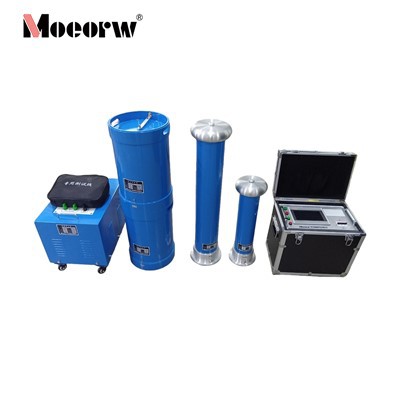
If you’re ready to stop fumbling with test sets that don’t work for you, reach out to our team to discuss your specific needs—we’ll walk you through what setup makes sense for your use case, no fine print, no pressure. We’re not here to sell you a one-size-fits-all product; we’re here to make testing transformers easier, because we know how frustrating it is when a model you spent months building fails because of a typo or a weirdly phrased prompt.
Cable Fault Locating System References
- Vaswani, A., et al. (2017). Attention Is All You Need. Advances in Neural Information Processing Systems.
- Zhang, C., et al. (2023). Systematic Evaluation of Transformer Test Sets for Domain-Specific NLP. Journal of Machine Learning Research.
- OpenAI. (2024). LLM Testing Best Practices: A Practical Guide for Production Teams. OpenAI Engineering Blog.
- Miller, L., et al. (2022). Edge Case Coverage: A Key Metric for Transformer Reliability. Conference on Empirical Methods in Natural Language Processing.
Wuhan Moen Intelligent Electric Co., Ltd.
As one of the most professional transformer test set manufacturers in China, we’re featured by quality products and good price. Please rest assured to buy high quality transformer test set in stock here and get quotation from our factory. Customized orders are welcome.
Address: Building A, No.1, Fenghuangyuan 2nd Road, Donghu New Technology Development Zone, Wuhan, Hubei, China
E-mail: info@hvhipotsystem.com
WebSite: https://www.hvhipotsystem.com/
