What’s Up When a C Channel Buffer’s Totally Empty? – From Someone Who Sells These Things For a Living C Channel
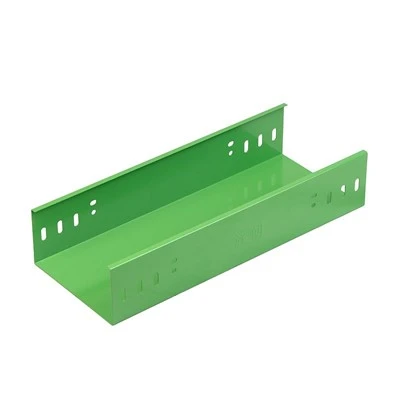
If you’re reading this, there’s a good chance you’re either in construction, manufacturing, or maybe you’ve stared at a blueprint and thought, “What even is that C Channel thing they keep talking about?” Here at the shop, we deal with these guys every single day – we cut ’em, bend ’em, coat ’em, and ship ’em out to jobs that span from tiny backyard decks to huge warehouse builds. And one question we get way more than you’d guess is: “What happens when a C Channel buffer is empty?”
First, let’s break down what a C Channel buffer even is, because it’s not some fancy tech jargon we made up. A buffer here’s not the thing you wear in a weightlifting gym (though, let’s be real, some days I need a buffer between me and my 9-to-5 stress). When we’re talking C Channels, a buffer is just the stock we keep on hand for jobs that need them – not the custom-cut, ordered-to-spec stuff, but the standard 10-foot, 20-foot lengths that are ready to grab right now. For example, if a framing crew shows up at a job site at 8 a.m. and realizes they ran out of the 4-inch galvanized C Channels for wall studs, that’s where our buffer comes in. It’s the quick-in, quick-out stock that stops a job from grinding to a halt.
Now, empty that buffer? It’s not just “oops, we’re out of stuff” – it’s a domino effect, and we’ve seen it play out way too many times with clients who skipped stocking their own buffers or miscalculated demand. Let’s start with the immediate stuff, because that’s where the chaos usually hits first.
Take a recent client of ours: a small general contractor out of Dayton, OH. They were putting up a 12,000-square-foot storage annex for a local food distribution place. Halfway through the stud walls, their guys went to pull the 6-inch pre-painted C Channels they’d ordered extra of, and turns out their foreman had written down the wrong length in the log. Their buffer? Completely empty – they only had the custom stuff on order, which wouldn’t be delivered for three more days. So they hit us up at 11 a.m. on a Tuesday, panicking, because they had 20 guys standing around doing nothing, and a deadline to have the enclosure closed before rain hit that weekend. We pulled from our own buffer, cut ’em to the exact length they needed, loaded ’em onto a truck by 2 that afternoon, and saved their bacon. But that’s the immediate hit: idle labor. Framers, welders, even the guys running the forklift – they don’t get paid for standing around, and a day of downtime here can cost a small contractor thousands. We’re not talking “oops, one screw missing” – we’re talking payroll, missed deadlines, and sometimes even fees for not meeting a contract’s timeline.
Then there’s the ripple effect on downstream materials. C Channels don’t work alone. They’re for connecting drywall, roof trusses, conduit for electrical, even HVAC ducting. If your stud frames are late because you had to wait for more C Channels, all that other stuff gets backed up too. In that same Dayton job, the electrical crew had their conduits pre-bent to attach to the C Channel studs – when the studs were late, they had to re-bend those conduits (or store them somewhere) and wait. The drywall guys were on standby, too, and their schedule was pushed back, which delayed the painting crew, and so on. By the end of the week, that small contractor’s extra cost was over $12,000 – and that was just labor and rescheduling. If they’d had even a small buffer of standard C Channels on site, that never would’ve happened.
Wait, but what if we’re talking about the manufacturing side, not just job site buffers? Because C Channels are used in all sorts of factory equipment, too – like conveyor frames, machine bases, even pallet racks. I worked with a warehouse equipment maker out of Indianapolis last year. Their buffer of raw C Channels (the ones before they’re cut and formed into rack components) ran empty for a week because their sales team had a huge last-minute order for a national retail chain. They couldn’t get more raw material fast enough, so their entire production line slowed down. They had to turn down another smaller order, and lost a repeat client because they couldn’t fulfill a rush job. That’s another angle: empty buffers (the raw material kind) mess with your supply chain capacity. If you’re relying on a steady flow of C Channels to keep your own machines or builds going, a gap in that stock stops you from meeting commitments.
Now, let’s talk about why buffers run empty in the first place, because it’s not always “someone forgot to order more.” Sometimes it’s forecasting errors. A client might think a job will take 50 C Channels, but it ends up taking 75, and suddenly they’re out. Sometimes it’s supply chain snags – lately, even with our shipping partners being more reliable, there are still delays in galvanizing coatings, so if a batch takes longer than expected, our buffer runs low for a week or two. Other times, it’s just bad planning: a small shop owner might think “we don’t need extra, we can just order when we need it,” not realizing that a rush order for custom-cut C Channels can take 24-48 hours, and if your job’s on a tight timeline, that’s too long.
We’ve learned a lot from these mistakes (ours and our clients’) over the years. A lot of new clients come to us thinking buffers are a waste of money – “why stock extra when we can just get what we need?” But the math checks out: the cost of downtime for even one day is usually way higher than the cost of keeping a small buffer on hand. For a job site, a buffer of 10-15 standard C Channels (the most popular lengths, like 8 and 10 feet, in galvanized or pre-painted) is enough to cover small miscalculations. For a small manufacturing shop, a buffer of 50-100 raw C Channels keeps your line from shutting down.
Don’t get me wrong, empty buffers aren’t always a disaster. Sometimes you’re on a super tight budget, and you can’t swing extra stock. But even then, there are fixes – like working with a supplier who can do rush cuts or ship same-day, like we do. We’ve had clients with empty buffers who call us, and we can usually get them the stuff they need in 24 hours, no extra rush fees (most of the time, anyway – we’re not miracle workers, but we try). The key is to plan for the gap, not pretend the gap won’t happen.
Another thing people don’t talk about: empty buffers can lead to material waste if you overcompensate later. If you finally get the C Channels you need after a week of waiting, you might buy way more than you actually need just to “make sure” you don’t run out again. Then you end up with a extra 30 or 40 C Channels sitting in the back of your shop, taking up space, rusting if they’re not coated right. That’s just throwing money away. So instead of overstocking after an empty buffer, keep a steady supply – order small batches of the most popular sizes on a regular schedule, so you never run totally empty.
We’ve seen all sorts of weird scenarios too. A few months back, a local event planner needed C Channels to build a temporary stage for a county fair. Their buffer was empty, so they thought they’d have to rent some – but renting would’ve cost them $500 for a weekend, whereas we sold them 4 standard C Channels for $40, and picked ’em up after the fair for scrap (we do that too, sometimes, for small jobs). That’s another angle: empty buffers push people to make bad decisions, like renting instead of buying, or rushing a bad job to meet a deadline, which leads to mistakes (like wobbly stage legs, which is definitely a no-go for a fair with hundreds of people).
So, putting it all together: when a C Channel buffer’s empty, it’s not just a minor inconvenience. It’s idle labor, delayed projects, extra costs, lost clients, and even the risk of unsafe work (I’ve heard stories of framers using whatever scrap they can find when C Channels run out, which is why those buffers matter so much for safety too). The good news is, it’s totally avoidable – whether you keep your own buffer on hand, or work with a supplier who can hook you up fast when you need it.
If you’re in construction, manufacturing, or any job that uses C Channels, and you’ve ever hit that empty buffer wall, you know exactly what I’m talking about. If you’re new to all this, don’t make the mistake of thinking “just-in-time” is always the best move. That works for some stuff, but not for C Channels – the backbone of so many builds and machines.

If you’re looking to stock your own buffer, or you’ve got an empty buffer and need a quick solution, hit us up to talk through what you need. We can help you figure out how much stock to keep on hand, or get you the exact C Channels you need, fast.
Aluminum Profile Cable Tray References
- Construction Industry Institute. (2022). "Job Site Material Buffer Strategies for Small to Mid-Sized Contractors." Construction Productivity Journal.
- American Institute of Steel Construction. (2021). "C Channel Specifications and Supply Chain Timelines." Steel Construction Manual, 15th Edition.
- National Association of Manufacturers. (2023). "Raw Material Buffer Needs for Small Manufacturing Facilities." Manufacturing Trends Report.
Hebei Jinglang Industrial Co., Ltd.
As one of the most professional c channel manufacturers and suppliers in China, we also support customized service. We warmly welcome you to wholesale high quality c channel in stock here from our factory. If you have any enquiry about quotation, please feel free to email us.
Address: Nanxinzhuang Village, Daweihe Hui and Manchu Township, Wen’an County, Langfang City, Hebei Province
E-mail: 18231629992@163.com
WebSite: https://www.jinglangcabletray.com/
