Hey there, if you’re in the market for a 5-ton biomass steam boiler, you’ve probably already realized it’s not a one-size-fits-all number—there’s way more that goes into the price than just “5 tons.” As a guy who’s been supplying these bad boys for years (not some corporate suit in a fancy office, trust me), I get that you just want straight talk, no fluff. Let’s break this down like we’re sitting at a workshop table sipping coffee, no jargon, no hidden catches. Biomass Steam Boiler
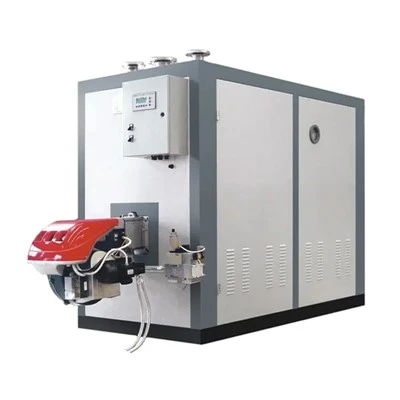
First, let’s get the basics out of the way: a 5-ton biomass boiler here means it can crank out 5,000 kg of steam per hour—typically at a pressure that makes sense for most small to medium businesses: food processing, textile mills, woodworking shops, even some small-scale pharmaceutical setups. The price tag? Right now, you’re looking at a range, but let’s not lead with a random number. It depends on three big things: what you’re feeding it (biomass type), the boiler’s build quality, and the extras you need to make it work for your space.
First up, the biomass fuel itself—wait, no, that affects operating costs, but it also changes the boiler’s upfront build. Let’s split upfront vs. operating because people mix these up all the time. Upfront is the price you pay to get the unit to your door, install it, and get it running. Operating is what you pay to run it each month. Let’s focus on the question: what’s the price? So upfront first.
If you go with a basic, standard 5-ton boiler that’s designed for common biomass like wood chips, sawdust, or wood pellets (the most common stuff around, easy to source), you’re looking at somewhere between $35,000 and $55,000. Wait, why the gap? Because of build quality. A cheap knockoff from a place that cuts corners on steel thickness will be cheaper, but it’ll break way sooner—you’ll end up paying way more in repairs down the line. I’ve seen customers go with the $35k option and call me 18 months later because their firebox rusted out and needed a $12k fix. Don’t do that. The mid-range, solid build ones are between $45k and $50k; these use thicker carbon steel (sometimes stainless steel for parts that touch combustion), have proper insulation to save energy, and meet basic emissions rules. The top-tier ones, which are fully automated, have ash handling systems, and meet strict EPA or EU emissions standards, hit $55k up to $65k. Those are for businesses that don’t want to mess with daily ash removal or worry about fines for pollution.
Now, the extras that add to the price, and they’re not optional for most people. First, delivery and installation. If you’re in a remote area, delivery might cost an extra $2k to $4k because the boiler’s big—you can’t just toss it in a pickup. Installation? That’s not just hooking up pipes. You need a proper foundation (it weighs several tons, so concrete is a must), a flue system, water treatment (biomass boilers can get scale buildup if your water is hard, so a treatment unit is non-negotiable), and if it’s automated, controls that link to your existing factory systems. Installation can run another $8k to $15k, depending on how far you are from utilities and how much piping you need. I always tell customers to set aside 20% of the boiler’s upfront cost for installation—way better than being stuck with unexpected bills.
Then there’s the emissions part. A lot of countries (US, EU, even parts of Southeast Asia now) have rules on particulate matter and carbon monoxide from biomass boilers. If your region requires a baghouse filter or a cyclone separator to clean the exhaust, that adds $3k to $7k. Skip this and you might get hit with a $1,000+ fine every month. I’ve had customers learn that the hard way—one small textile mill near Chicago ignored the rule and got fined $15k in 3 months, which was more than the filter cost.
Wait, let’s talk about fuel again because it’s tied to how much you’ll actually use, and that changes the value of the boiler. A 5-ton biomass boiler runs roughly 8 hours a day, 5 days a week for a small business. If you’re using wood chips (which are cheap, like $150 a ton locally), your monthly fuel cost is around $2,000. If you went with a small coal-fired boiler (way less efficient for this size), you’d be paying $3,500 a month, so biomass saves you big time long-term. That’s why people don’t mind paying a bit more upfront—they make that money back in 2 to 3 years from lower fuel costs.
Now, let’s clear up some myths I hear all the time. First: “Is a 5-ton boiler the right size for me?” A lot of people buy 5 tons because they think bigger is better, but if you only need 3 tons of steam per hour, a 5-ton one is less efficient—you’re wasting fuel. That’s why I always ask customers to calculate their peak steam demand: if your max is 4.5 tons, go with a 4-ton or a modular setup, not 5. Modular might cost a bit more upfront, but it’s more flexible as you grow. Second: “Used boilers are a good deal.” I’ve seen too many used boilers from overseas that don’t meet local emissions rules, or have hidden damage. A used 5-ton boiler might be $15k, but if it needs a new firebox or a filter, that’s another $10k, so you end up paying almost as much as a new basic one. Plus, no warranty—if something breaks, you’re on your own.
Wait, let’s get back to numbers, but make them real. Last quarter, I sold a mid-range 5-ton boiler to a food processing plant in Ohio. They needed steam to pasteurize cheese, so they needed consistent pressure, automated ash removal, and an emissions filter. Total price with delivery, installation, and filter? $58,500. They told me their fuel cost went from $4,200 a month with their old oil boiler to $1,800—they’ll pay off the extra cost of the biomass boiler in 2.5 years. That’s the kind of math I love. Another customer, a small woodworking shop in North Carolina, went with the basic 5-ton boiler, did their own installation (they’re handy with tools), no filter needed because their county has loose rules. Total cost was $42,000, and they save $1,200 a month over their old electric boiler.
Now, what affects price in the future? Biomass is a big push for businesses going green, so demand is up, and raw material costs (steel, insulation) have gone up 10% in the last year. If you’re looking to buy now, there’s no real hurry, but if you wait 6 months, you might see prices go up another 5%. Also, if you need a boiler that runs on alternative biomass, like agricultural waste (rice husks, bagasse) instead of wood, that might add $2k to $5k because the combustion system has to be adjusted for different fuel sizes and heat output.
Wait, let’s address the elephant in the room: why is there such a big gap between $35k and $65k? It’s all about longevity and hassle. A cheap boiler might last 10 years, a mid-range one 15, a top-tier one 20. The cheap one will need repairs every year, the mid-range every 2-3 years, the top-tier almost nothing. I tell every customer: you don’t want to be the guy at 2 a.m. on a Saturday calling a repairman because your boiler died mid-production. That’s costing you way more than the difference between a $35k and $50k boiler.
So, to wrap this up, the price of a 5-ton biomass steam boiler isn’t a single number—it’s based on what you need. If you’re a small business on a tight budget, can do some installation yourself, and don’t need fancy emissions gear, you’re looking at $35k to $45k. If you need something reliable, easy to maintain, and compliant with rules, $45k to $55k. If you want the top-of-the-line, low-hassle, green option, $55k to $65k. Add another 15-25% for installation and extras like filters or water treatment.

Now, if you’re serious about getting a real quote, not just numbers from a blog, reach out to me. I don’t do generic sales pitches—I’ll ask you about your fuel type, your steam needs, your location, and give you a price that fits your actual setup, no hidden fees. No bots, no scripts, just straight talk from someone who’s been doing this for years. If you’re ready to stop overpaying for energy and get a boiler that works for you, hit me up.
Gas Hot Water Boiler References:
- International Energy Agency. (2022). Biomass Boilers for Industrial Applications: Cost and Performance Analysis.
- U.S. Environmental Protection Agency. (2023). Emissions Standards for Commercial and Industrial Biomass Combustion Systems.
- Biomass Energy Resource Center. (2022). Industrial Biomass Boiler Size Selection and Cost Guidelines.
- Global Market Insights. (2023). Industrial Boiler Market: Steel and Component Cost Trends.
Xinxiang Huayuan Container Equipment Co., Ltd.
With abundant experience, we are one of the most reliable biomass steam boiler manufacturers and suppliers in China. We warmly welcome you to buy durable biomass steam boiler made in China here from our factory. If you have any enquiry about cooperation, please feel free to email us.
Address: No.2, South Road, Industrial Cluster Zone, Genghuang Township, Fengquan District, Xinxiang City, Henan Province
E-mail: cncd527@gmail.com
WebSite: https://www.huayuanequipment.com/
