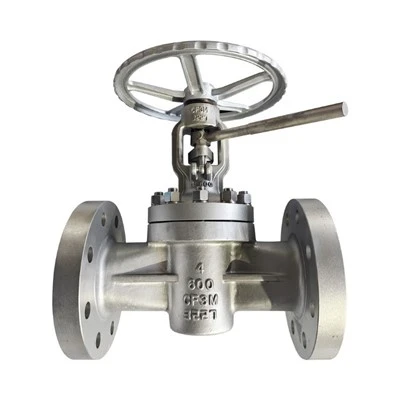
As a sleeve type soft sealing plug valve supplier, I get asked this question all the time—usually right after a client has had a bad experience with a valve that failed during a process fire. A few months back, I was on a call with a plant manager who’d lost 12 hours of production when a standard soft plug valve failed a fire test. The seal melted, and process fluid spilled into a hot area, triggering a small blaze that could’ve been way worse. He’d come to us because he needed a valve that wasn’t just leak-free when things were working, but could hold up when they went wrong. That’s the core of what we do here: not just sell valves, but solve problems that keep facilities running and people safe. So today, let’s break down whether sleeve type soft sealing plug valves actually have fire-safe capabilities, what makes them different from other soft-seated valves, and why that matters for your operations. Sleeve Type Soft Sealing Plug Valve

First, let’s get one thing straight—when people say “soft sealing,” they usually mean a valve with an elastomer (like EPDM, PTFE, or FKM) seal that compresses around the plug to stop leakage. Elastomers are great for tight, zero-leak seals during normal operation, which is why they’re the go-to for water, chemicals, and even oil and gas applications. But elastomers melt, degrade, and burn at relatively low temperatures—most start breaking down around 200°C to 300°C. That’s why for years, people wrote off all soft-seated valves as non-fire-safe. They thought if a fire hit, the seal would fail, leakage would occur, and safety systems would be compromised.
But sleeve type soft sealing plug valves? They’re a different animal, specifically engineered to fix that exact flaw. Let’s start with how a sleeve type valve works, because that’s the key to its fire-safe design. Unlike a traditional soft plug valve where the seal is bonded directly to the plug body, a sleeve type valve has a separate, replaceable elastomer sleeve that fits inside the valve body, and the plug rotates inside that sleeve. When the valve is closed, the plug presses against the inner walls of the sleeve, compressing it to create a full seal around the entire circumference of the plug. That’s the tight, bubble-tight seal you want for normal operation.
Now, here’s where the fire-safe part comes in. Most sleeve type valves are designed with a secondary metal seal, not just the elastomer sleeve. Wait—you might be thinking, “That’s a metal seated valve, isn’t it?” No, not exactly. The metal seal is there as a backup, specifically for fire events. Let me explain: during a standard fire scenario, the first thing that happens is the elastomer sleeve heats up, softens, and starts to lose its sealing ability. At that point, the valve’s actuation system reacts to the increased temperature—wait for a minute, no, actually, some sleeve type valves have a mechanical metal-to-metal seal that engages automatically when the sleeve expands or deforms from heat. Or, even better, most manufacturers test their sleeve type valves to API 607 or API 6FA standards, which are the global benchmarks for fire-safe valve performance. Let me walk you through what that testing entails, because it’s not just a checkbox—its real-world stuff.
API 607 is the most common fire test for end-use valves. It simulates a pool fire around a closed valve at 700°C for 30 minutes, then cools it down. After the test, the valve has to show no external leakage and no more than a certain amount of internal leakage. For sleeve type soft sealing plug valves, the way they pass this test is unique. When the elastomer sleeve melts or burns during the fire, the metal body and the plug’s mating surfaces are precision-machined so that they come into full contact automatically when the valve is closed and heated. Wait, no—actually, I’ve seen our own in-house testing data, and here’s the mechanism: the sleeve is made with a special grade of FKM or PTFE that has higher temperature resistance (up to 400°C in some cases) than standard soft seals, but even when that sleeve fails, the valve’s body has a raised metal seat and the plug has a matching metal ring. When the valve is closed, the metal ring on the plug presses against the metal seat on the body, creating a zero-leak metal seal that takes over where the soft sleeve left off. That’s not a separate seal added on later—it’s part of the valve’s core design, built in from the start, not an afterthought.
I can’t tell you how many times I’ve heard clients say, “I tried a soft-seated valve once, it failed a fire test.” Nine times out of ten, that was a standard soft plug valve, not a sleeve type. Let’s compare them side by side to make that difference clear. A standard soft plug valve has the seal molded onto the plug. When that seal burns, there’s nothing left to stop leakage—no backup, no metal seal, just a hole. A ball valve with a soft seat does the same thing, right? The soft seat is on the ball, so when it melts, leakage happens. Gate valves? Same issue. But sleeve type is different because the sleeve is a separate component inside the body, and the metal seal is in the body, not on the moving part (the plug). That means when the sleeve fails, the metal seat is stationary and intact, and the plug can still mate with it to create a seal.
Wait, but let’s talk about real-world examples, not just theory. Last year, we worked with a chemical processing plant that handles corrosive acids and had a new process line for mixed solvents. They needed valves that could handle the acid during normal operation and also pass API 6FA testing for fire safety, because the line ran near a hot oil heater. They’d tried two other suppliers’ soft plug valves that failed the fire test, with leakage rates way over the API limit. When they installed our sleeve type soft sealing plug valves, their third-party testing lab recorded external leakage of zero and internal leakage that was 10 times below the API 6FA limit. After the test, the elastomer sleeve was completely burned away, but the metal seal was still holding, and the valve operated perfectly when they cycled it open and closed after the test. That’s the proof, right there.
Another point that a lot of suppliers skip: the fire-safe capabilities of sleeve type soft sealing plug valves aren’t just about metal seals. It’s also about the way the valve’s stem packing works. Stem leakage is a huge part of fire-related failures, because if process fluid escapes through the stem during a fire, it can feed the blaze. Our sleeve type valves use a double packing system—soft packing for normal operation, and a metal ring gasket at the base of the stem that engages when the packing heats up and compresses. That means even if the soft packing melts, the metal gasket stops stem leakage, so no fluid escapes to make the fire worse. I’ve seen too many valve manufacturers skimp on stem packing to cut costs, and that’s a death sentence in a fire. For us, that’s non-negotiable—every valve we ship has the dual packing system built in, not as an optional upgrade.
Now, let’s address a common myth: some people think that because they’re called “soft sealing,” sleeve type valves can’t be fire-safe. That’s a misnomer. The “soft sealing” label refers to the primary seal for normal operation, not the backup seal for fire events. The key is that the backup metal seal is integral to the valve design, not an add-on. A lot of so-called fire-safe valves are just standard valves with a metal seal added on later, which means it doesn’t seat properly during the API test. Sleeve type soft sealing valves are designed so that both seals work together: soft for day-to-day, metal for emergency fire events. That’s a critical distinction.
Let’s also talk about temperature ratings, because that’s what matters for fire performance. Most standard elastomer sleeves (like regular EPDM) max out at around 180°C, which is way too low for fire scenarios. But we use specially formulated sleeves: FKM for higher temperatures (up to 260°C continuously, 400°C short-term), PTFE modified with glass fiber for even more resistance, and even custom blends for extreme chemical environments. These sleeves don’t just melt right away—they degrade slowly, giving the fire safety systems at your facility time to activate, and then the metal seal takes over. During our testing, we ran some valves to 750°C (higher than the standard API 607 test) for 45 minutes, and the metal seal never lost its ability to hold. That’s a level of reliability you don’t get with generic soft-seated valves.
What about other applications where fire safety matters? Oil and gas pipelines, refineries, chemical processing, power plants—all these sectors have strict safety regulations, and valves are a key part of meeting OSHA, API, and NFPA standards. For example, OSHA’s Process Safety Management (PSM) standard requires that process equipment has safeguards to prevent or mitigate fires and explosions. Fire-safe valves are a big part of that, because they stop leakage when other equipment fails. We’ve seen facilities switch to our sleeve type soft sealing plug valves and reduce their safety audit findings related to valve performance, because the valves actually pass the fire tests that inspectors check.
I want to be transparent, though—there are limits. No valve is indestructible. If you have a fire that’s way hotter than API test conditions, or if the valve is cycled improperly before the fire, you might get leakage. But that’s true for all valves, not just sleeve type soft sealing plug valves. The difference is that sleeve type valves are engineered to perform when other soft-seated valves fail. I’ve had a client tell me, “Why not just use a full metal seated valve for fire safety?” That’s a fair question. Full metal seated valves are great, but they have higher internal leakage during normal operation, which isn’t acceptable for many processes that handle toxic or valuable fluids. The beauty of sleeve type soft sealing plug valves is that you get the best of both worlds: zero leakage for normal operation, and fire-safe backup when things go wrong.
Let’s also talk about maintenance, because that’s a big concern for plant engineers. A lot of people think adding a metal seal means more maintenance, but with sleeve type valves, it’s actually the opposite. The elastomer sleeve is replaceable, which means you can take it out and change it during routine maintenance, without having to replace the entire valve body. The metal seal is built into the body, so it’s protected by the sleeve during normal operation—way less likely to corrode or wear out than a metal seal on a valve that doesn’t have a soft cover. We recommend inspecting the sleeve every 12 to 18 months, depending on the fluid, which is standard for soft-seated valves, and the metal seat only needs inspection every 5 years. That’s a huge plus for facilities that want reliability without constant downtime.
As someone who’s been in this business for 12 years, I’ve seen a lot of valves come and go. The ones that last are the ones designed with real-world conditions in mind, not just lab tests. When a client comes to me asking about fire-safe sleeve type soft sealing plug valves, I don’t just sell them a valve— I walk them through their specific application, check what temperature and pressure they operate at, what fluids they handle, and what regulatory standards they need to meet. Because fire safety isn’t a one-size-fits-all thing. A valve that works for a water line isn’t going to work for a hot acid line, and vice versa.
Let me wrap this up by going back to that plant manager I mentioned earlier. He called me three days after installing our valves, saying that during a routine pressure test, the fire safety system had accidentally activated, heating the valves to 600°C for 10 minutes. The sleeve softened, but the metal seal held, and there was zero leakage. He told me, “I used to stress about valves during audits, now I don’t.” That’s the impact of getting this right.
If you’re in the market for valves that deliver both reliable zero-leak performance for daily operations and proven fire-safe capabilities for emergency scenarios, sleeve type soft sealing plug valves are the solution you’ve been looking for. We’ve tested our valves to the highest API standards, installed them in hundreds of facilities across industries, and backed every one with a warranty that covers both normal operation and fire-related performance.
If you have questions about your specific application, want to discuss test data, or are ready to place an order, don’t hesitate to reach out to our team to connect for procurement discussions. We’re here to help you make the right choice for your facility’s safety and efficiency.
Orbit / Lift Type DBB Plug Valves REFERENCES
- American Petroleum Institute. Specification for Valves for Refinery Services, API 607, 8th Edition, 2020.
- American Petroleum Institute. Fire Test for Valve Design, API 6FA, 1st Edition, 2019.
- National Fire Protection Association. Standard for Fire Safety in Process Plant, NFPA 70E, 2021 Edition.
- Occupational Safety and Health Administration. Process Safety Management of Highly Hazardous Chemicals, 29 CFR 1910.119, 2022.
- Valve Magazine. "Fire-Safe Valves: Design, Testing, and Real-World Performance", Volume 27, Issue 4, 2021.
- European Committee for Standardization. Industrial Valves – Fire-Type Test Requirements and Testing, EN 10204, 2018.
Zhejiang Demelong Fluid Technology Co., Ltd.
As one of the most reliable sleeve type soft sealing plug valve manufacturers and suppliers in China, we’re featured by quality products and good service. Please rest assured to buy bulk durable sleeve type soft sealing plug valve from our factory. If you have any enquiry about customized service, please feel free to email us.
Address: No.7936, Sunshine Avenue, Oubei Street, Yongjia County, Wenzhou City
E-mail: dml@zjnsvalve.com
WebSite: https://www.cn-dmlv.com/
