If you’ve ever stared at a thick chunk of titanium on your workbench and thought, “Can my angle grinder even handle this?” — let me cut to the chase: yes, it can. But not just any random wheel, not the flimsy metal-cutting disc you use for 1/8-inch steel, and definitely not if you skip half the safety steps that make or break a cut. I’m the guy who’s been selling angle grinders and their accessories for 7 years, fixed way too many grinder burns from customers who tried to rush a titanium cut, and tested every trick in the book to make this work right. So I’m gonna keep this real, no fancy engineering jargon, just what actually works when you need to cut titanium with a grinder. Angle Grinder

First, let’s get one thing straight: titanium isn’t steel. It’s stronger, more heat-resistant, and it loves to weld itself to anything that gets too hot or too slow. If you grab a standard 4.5-inch metal disc for your grinder and start hacking, you’ll end up with a disc that’s permanently fused to the titanium, a grinder that’s whining way too loud, and maybe a couple of tiny titanium shavings that’ll stick to your arms (ask me how I know that last one). So step one? Ditch the generic discs. You need a specific type of cut-off wheel or grinding disc made exclusively for titanium. Wait, let’s clarify: cut-off wheels are thinner (usually 1/32 to 1/16 inch) for quick, straight cuts, while grinding discs are thicker (1/8 to 1/4 inch) for shaping or removing excess material after a cut. Both have a key feature: they’re made with aluminum oxide grain that’s formulated to resist the extreme heat titanium generates when you grind it. Cheap discs will glaze over (that’s when the grain wears down and leaves a smooth, useless surface) within 30 seconds on titanium, so spring for the good stuff — I always recommend 3M Cubitron II or DeWalt’s titanium-specific discs, but honestly, any brand that’s labeled “for exotic metals” works. Pro tip: check the grinder’s maximum RPM rating before you buy a disc. Your 4.5-inch angle grinder should be running between 10,000 and 12,000 RPM — if the disc’s max RPM is lower than that, it’ll fly apart. Safety first, always.
Next up: prep your workspace and your grinder. Titanium is tough, so you can’t just set it on a flimsy workbench and cut it. Clamp it down tight — I’m talking four clamps minimum, not two. If the piece wiggles even a little when you push the grinder, it’ll bind, snap the disc, or send shavings flying. Also, mark your cut line with a permanent marker, and use a center punch to make tiny indentations every inch along the line. Those little marks give the disc a place to start cutting without skidding, which is a huge win for clean, straight cuts. Now, your grinder itself: make sure the guard is adjusted correctly. For cut-off wheels, the guard should cover about 2/3 of the disc — not more, not less. Too much guard blocks your view, too little lets shavings hit you in the face. And do a quick check before you turn it on: tighten the spindle nut, make sure the disc is seated right (no wobble), and test the trigger to make sure it starts smoothly. No one needs a grinder that lurches forward mid-cut.
Now, the actual cutting part — this is where most people mess up, even if they have the right disc. Let’s talk heat. Titanium has a low thermal conductivity, meaning all the heat from the grinder’s friction stays right at the cut line, instead of spreading out like it does in steel. That heat can warp the titanium, ruin the disc, or even cause a fire if you’re cutting thin sheet titanium near flammables. So here’s the golden rule: go slow, and make light passes. Don’t push hard. If you’re pressing down so hard that the grinder is straining and whining, you’re doing it wrong. Push just enough to make the disc bite into the titanium — like you’re cutting a stick of butter, not a 2-inch steel bar. For thick titanium (over 1/4 inch), you’ll need to make multiple shallow passes instead of one deep cut. Let the disc cool down for 10 seconds every 15 seconds of cutting. I know, it takes longer, but it’s way better than replacing a disc every two minutes. Another trick: keep a spray bottle of water or a cutting lubricant handy. Wait, hold up — can you spray water on an angle grinder? Only if your grinder is rated for wet cutting. Most standard angle grinders are dry-only, so use a cutting fluid specifically for titanium (like TapMagic or Blaser) instead. The lubricant cuts down on heat, reduces friction, and makes the disc last 5x longer. If you don’t have lubricant, even a can of compressed air to blow away metal shavings as you go helps — just don’t use your mouth, those shavings will go right into your lungs.
Wait, what if you don’t have a cut-off wheel? Can you use a grinding disc instead? Yeah, but it’ll be slower, and you’ll need to keep it moving. Grinding discs are thicker, so they remove more material at once, but they also generate more heat. If you’re using a grinding disc, make sweeping motions along your cut line, not just holding the disc in one spot. Never stop grinding on the titanium — that’s how you get a deep gouge or a heat spot. And don’t angle the disc more than 15-20 degrees from the vertical, otherwise you’ll wear down the edge way too fast. I’ve seen guys angle it 45 degrees trying to speed up, and the disc turned to dust in 10 seconds. Not worth it.
Now, safety — I can’t stress this enough. Titanium shavings are sharp, and the disc spins at 10,000 RPM, so one wrong move and you’re injured. Here’s the gear you can’t skip: full-face shield (not just safety glasses — shavings can bounce up from any direction), heat-resistant gloves (leather, not cotton — cotton melts at high temps), long pants, closed-toe shoes, and a dust mask. Titanium shavings can ignite at around 1,000 degrees, so if you’re working near wood or fabric, clear the area first. I once had a customer set his garage on fire because he ignored that rule — his titanium shavings landed on a paper towel and caught fire. Oops. Also, never use a damaged disc. Cracks, chips, or even a small dent mean that disc can shatter mid-cut. Toss them, no exceptions.
Wait, let’s test a common myth: can I use a plasma cutter instead? No, not if you’re only cutting a small piece at home — angle grinders are way more portable, and you don’t need a tank of gas or electricity for a plasma cutter. For most small to medium titanium projects (like bike parts, metal art, or home repairs), an angle grinder is perfect. The key difference is that a grinder gives you more control for curved cuts, while plasma is better for straight, thick cuts. If you’re doing a custom shape with titanium, a grinder is the way to go.
I’ve had so many customers come back and say, “I tried cutting titanium with a cheap grinder and a regular disc, it was a disaster.” And then they switch to our angle grinders (we sell industrial-grade ones that handle the heat way better) and the right discs, and suddenly they’re making clean cuts in 5 minutes instead of 30. The grinder itself matters, too — a cheap consumer grinder might not have enough power for thick titanium. Look for one with at least 7.5 amps, 110V, and a spindle that locks, so you can change discs without a wrench. We stock all that, but enough about our products for a second — let’s get back to the process.
Another tip for clean cuts: if you’re cutting a thin sheet of titanium (1/8 inch or thinner), clamp a straight edge (like a metal ruler or a piece of angle iron) right along your mark. Run the grinder’s base plate along the straight edge to guide the cut, so you don’t drift. Drifting means a crooked cut, and if you’re making a part that needs to fit together, a crooked cut is useless. I’ve saved so many customers from ruining a $50 titanium sheet with that simple trick.
What about after the cut? Titanium has a sharp, burr-edged side, so you’ll need to grind the edges down with a flap disc (another specific one for titanium, same as before). The flap disc’s abrasive flaps will smooth the edge without leaving too much heat. Again, go light here — don’t grind too long in one spot, or you’ll discolor the titanium. Discoloration is just oxidation from heat, and while it doesn’t affect the strength, it doesn’t look great if your part is for a project that needs a finish.
Now, let’s troubleshoot the most common mistakes: if your disc is burning up and wearing out fast, you’re either pushing too hard, using a non-titanium disc, or not letting the disc cool. If your cut is crooked, you’re either not clamping the titanium tight, not using a straight edge, or the disc is wobbling. If you’re getting titanium shavings welding to the workbench, you’re running too slow, not using lubricant, or leaving the disc in one spot too long. All of these are fixable with a small adjustment, no need to buy a new grinder.
At the end of the day, cutting titanium with an angle grinder isn’t rocket science, but it’s not the same as cutting steel. The biggest mistake people make is treating it like a faster, tougher steel — it’s not. It needs specific tools, slow, light passes, and respect for its heat. If you follow all the steps, you’ll get clean cuts, long-lasting discs, and no injuries.
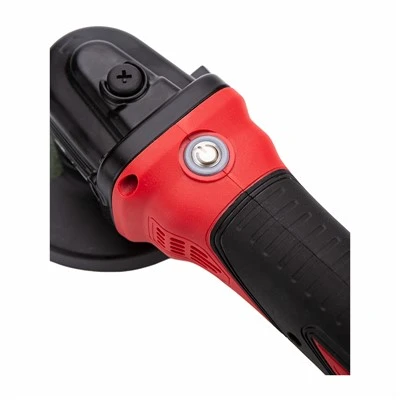
For anyone who’s still hesitant, or needs a grinder that can handle thick titanium without breaking, we’ve got a range of industrial-grade angle grinders and titanium-specific accessories that are tested and ready to go. If you want to talk through your project, get a recommendation for the right disc or grinder, or place a bulk order for your shop, our team is here to help. We don’t sell cheap junk, and we don’t leave customers hanging when they need tips or replacement parts.
Brushless Angle Grinder References:
- ASM International. (2006). Titanium: Properties, Processing, and Applications.
- OSHA. (2022). Safety Guidelines for Angle Grinder Operation.
- 3M. (2023). Performance of Cubitron II Cut-Off Wheels on Exotic Metals.
- Blaser Lubricants. (2021). Cutting Fluid Requirements for Titanium Machining.
Zhejiang Cheering Sewing Machine Co., Ltd.
With abundant experience, we are one of the most professional angle grinder manufacturers and suppliers in China. Please feel free to wholesale advanced angle grinder for sale here from our factory. We also accept customized orders.
Address: No.69 Heping Road, Lishui, Zhejiang, China
E-mail: gxjlq@126.com
WebSite: https://www.cheering-machinery.com/
