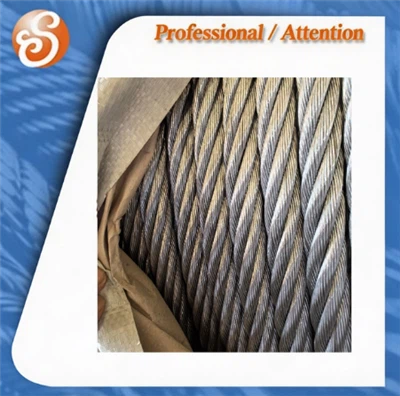
Steel Wire Rope Hey there! If you’ve ever walked along a marina pier, watched a sailboat glide past, or even grabbed a mooring line at a local boatyard, you’ve probably wondered: what’s that strong, shiny stuff holding everything together? More often than not, it’s stainless steel wire rope—especially if you’re dealing with anything that’s out in the saltwater long-term. As a stainless steel wire rope supplier who’s been in this game for over a decade, I get this question all the time: Can stainless steel wire rope actually hold up in marine environments? Spoiler: The short answer is yes—but it’s not a one-size-fits-all situation. Let’s break this down like I’d break it down for a boat owner calling me at 7 a.m. panicking about a snapped mooring line. First, let’s talk about why regular steel is trash at the beach. Regular carbon steel rusts. Like, bad rust. Leave it outside in rain? It’ll get surface rust in a week. Submerge it in saltwater? By month three, it’ll be so corroded it’ll crumble if you look at it. Salt is the enemy here—saltwater’s full of chloride ions, which are tiny little rust bombs that chew through metal’s protective layer. Carbon steel doesn’t have anything to fight back, so it just turns into a flaky mess that’s useless for anything holding value. So stainless steel’s whole thing is that it’s got chromium—like 10.5% minimum, per industry standards. That chromium forms a super thin, invisible oxide layer on the surface the second it hits oxygen. If that layer gets scratched, it self-heals—more chromium pops up to cover the scratch, no fancy coating needed. That’s the magic. But here’s the catch: Not all stainless steel is the same. Most people don’t know this, which is why I’ve seen way too many guys buy cheap wire rope from a big-box store, use it as a mooring line, and then call me six months later like “wait, this broke why?” The two main types we work with for marine use are 316 and 304 stainless. 304 is the one you see on kitchen sinks and basic stuff—it’s got chromium and nickel, but not enough molybdenum. Molybdenum is the guard against chloride ions, which are everywhere in saltwater. So 304 works for things like railings on a deck that get splashed occasionally, but submerge it regularly in saltwater? It’ll pit. Pitting is when tiny holes corrode through the metal from the inside out—way worse than surface rust, because you can’t see it until it’s too late. 316 stainless, though? That’s the marine grade. It’s got that molybdenum, so it’s built to handle that constant salt exposure. I tell customers: if your rope is gonna be under water, tied to a dock post for months, or part of a boat’s rigging that’s always splashed, go 316. 304’s for things like a garage door or a backyard clothesline—places where it gets some moisture, but not full-on marine conditions. Now, let’s get into real-world use cases because that’s what matters. I’ve supplied 316 wire rope for all kinds of marine stuff, and some works like a charm, some… well, I had one customer use it for a makeshift anchor line on a small fishing boat, and it lasted three years before he had to replace it. Another guy used 304 for a mooring line, and it pitted through in 10 months. Why the difference? Let’s talk about application specifics. First, if it’s a rigging part on a sailboat—like the shrouds holding up the mast—316 is non-negotiable. Those are under constant tension, taking wind and salt spray, and if they snap while you’re out on the water? Not good. I’ve had pro sailors tell me they’ve had 316 rigging last 10+ years with minimal maintenance. Then there’s mooring lines. A lot of people mix wire rope with synthetic lines like nylon, but wire rope is way more durable for permanent moorings because it doesn’t stretch like nylon. That means it doesn’t move as much with the tides, so it’s less likely to chafe against a dock post. Wait, chafe—another big one I see people miss. Even the best stainless steel can get beat up if it’s rubbing against a hard surface. If your mooring line is rubbing on concrete or rusty dock hardware, you need to add chafe guards—either plastic ones I sell, or even old cut-up garden hoses. I’ve seen a perfectly good 316 line snap because it was chafed through by a rough dock corner, no pitting involved. Then there’s underwater stuff, like lift lines for a boat lift or anchors. I recently supplied a roll of 316 wire rope to a guy who runs a charter fishing business—he uses it to lower his boat’s dive platform into the water. That line is submerged 24/7, in saltwater that’s also got some sediment and small debris floating around. He’s had it for two years, and the only thing he’s had to do is give it a rinse with fresh water once a month. No rust, no pitting, no issues. Compare that to a customer who tried to use 304 for the same job—he called me six months later, his line had pitted so bad the platform almost dropped into the water. Oops. What about maintenance? Even 316 isn’t set-it-and-forget-it. It’s still a metal, it’s still out in the elements. The big one here is rinsing with fresh water. Salt stays on the surface, even if you can’t see it, and over time it can eat through that chromium layer—especially if there’s any dirt or grime mixed in that traps the salt. I tell marine customers to rinse their wire rope with fresh water every couple of weeks, especially after a big storm that kicked up a lot of salt spray or debris. No need for fancy soap, just a garden hose. If you’ve got a line that’s been sitting underwater, pull it up every few months and check for pitting or fraying. Look at the ends where the crimps or swages are—sometimes those connection points can trap salt, so make sure you clean those too. Another thing I always warn about is galvanic corrosion. That’s when two different metals touch each other in saltwater, and one eats the other. Like, if you tie a stainless steel line to a regular steel dock cleat, that cleat will rust way faster than it should, and the stainless might get attacked too. So if you’re using stainless wire rope in a marine setup, make sure all the other hardware it’s touching is also stainless—316, to match, is best. I’ve had a customer who learned this the hard way: he tied his mooring line to a regular iron cleat, and after a year, the cleat was so corroded it fell off the dock, and his line had tiny pits where it touched the cleat. Total nightmare. Now, let’s talk about myths I hear all the time. First myth: “Stainless steel is indestructible.” No way. I’ve seen 316 wire rope snap if it’s overloaded, or if it’s got a sharp kink in it. Kinks are the worst—they create weak points in the wire strands, and saltwater can get into those kinks and speed up corrosion. If you kink your line, don’t try to fix it—replace that section, because it’s not as strong as it should be. Second myth: “All stainless steel is the same for marine use.” Nope, like I said earlier—316 vs 304 is a huge difference. I once sold a bulk order of “marine-grade” wire rope to a supplier who was trying to cut costs, and it turned out they were selling 304 as 316. The customer got it, used it, and complained it rusted. We ended up replacing it with actual 316, and they’ve been a repeat customer ever since. That’s why I always make sure to label everything clearly, and talk to customers about exactly what they need, not just what they want to pay. Third myth: “Wire rope is too heavy for marine use.” Sure, it’s heavier than synthetic, but it’s way stronger for its weight, and it doesn’t stretch. For permanent moorings, that’s a win—you don’t have to adjust the tension every time the tide changes, and it doesn’t get pulled out of shape by heavy boats. Plus, modern wire rope is flexible enough that you can handle it without straining, as long as you’re not lifting a million pounds. Wait, let’s also mention the environmental benefits? I know that’s not the first thing on your mind when you’re dealing with a snapped mooring line, but stainless steel is 100% recyclable. Unlike synthetic lines that end up in landfills or the ocean, if your old wire rope is done, you can melt it down and make new stuff. That’s a big plus for boaters who care about keeping the marine environment clean—no plastic waste from old lines sitting in the water. Now, let’s wrap this up with what you actually need to do if you’re thinking about using stainless steel wire rope in marine settings. First, pick the right grade: 316, not 304, for anything that’s going to be exposed to or submerged in saltwater. Second, match your hardware—no mixing stainless with regular steel, that’s a recipe for corrosion. Third, do regular maintenance: rinse with fresh water, check for chafe and pitting, replace kinked or damaged sections. Fourth, don’t overload it—stainless is strong, but it has weight limits, just like anything else. At the end of the day, I’ve been doing this long enough to know that there’s no perfect material for every marine job, but stainless steel wire rope is one of the best for long-term, heavy-duty use—if you do it right. I’ve seen it hold sailboats through hurricanes, keep charter boats moored year-round, last longer than synthetic lines that get chewed up by sun and salt. But you can’t just grab any old rope from the store and expect it to work. If you’re not sure what grade you need, or what size rope to get for your boat’s rigging or mooring, hit me up. I’ve helped hundreds of boaters, dock owners, and marine businesses pick the right wire rope, no salesy garbage—just honest advice based on what works in the real marine world. Don’t waste time and money on cheap rope that’ll snap in a few months. Let’s talk through your specific project, and I’ll help you get the right stainless steel wire rope that’ll hold up out on the water. References: 1. “Stainless Steel Grades for Marine Applications,” World Stainless Association, 2022. 2. Marine Corrosion: Causes and Prevention, National Association of Corrosion Engineers, 2018. 3. “Wire Rope Selection for Marine Mooring and Rigging,” American Boat and Yacht Council, 2021. Stainless Steel Wire Rope

Nantong Shenwei Steel Wire Rope Co., Ltd.
Nantong Shenwei Steel Wire Rope Co., Ltd. is well-known as one of the leading stainless steel wire rope manufacturers and suppliers in China since 1994. Our factory offers high quality stainless steel wire rope made in China with competitive price. Welcome to contact us for quotation.
Address: No.1709, Zhangjiang Road, Nantong Economic Development Zone, Nantong City, Jiangsu, China
E-mail: nt@sw-steelwirerope.com
WebSite: https://www.shenwei-steelwirerope.com/
