If you’ve ever stared at your electricity bill and thought, “There has to be a better way,” you’re not alone. As someone who runs a small DIY solar panels supply business, one of the most common questions I get in my DMs and at local home improvement events is: “Can I really power a refrigerator with DIY solar panels?” It’s a question that makes total sense—refrigerators run 24/7, they’re a big part of your home energy use, and switching to solar for them feels like a no-brainer. But the answer isn’t a simple yes or no; it takes a little real-world know-how, a solid understanding of how both refrigerators and solar systems work, and a willingness to plan. Today, I’m breaking this down like I do with every customer who walks through my door, no jargon, no sales pitch fluff, just the facts you need to decide if this is right for you. DIY Solar Panels

First, let’s get on the same page about how much power a refrigerator actually uses. A lot of people guess it’s a ton, but that’s a mistake most folks make when calculating solar needs. Refrigerators aren’t like a space heater that cranks out 1,500 watts every time it’s on. They have a compressor that cycles on and off—usually for only 20 to 40 percent of the time, depending on your fridge’s age, size, and how well it’s insulated. For example, a standard 18-cubic-foot top-freezer fridge made in the last 10 years uses about 100 to 150 watt-hours (Wh) per day. That’s way less than you’d think! An older fridge, say pre-2000, might use 300 to 500 Wh a day, which is still manageable if you size your system right.
The key here is watt-hours, not just maximum wattage. Maximum wattage is what your fridge uses when the compressor kicks on, and that number is usually between 700 and 1,200 watts. But that only lasts for a minute or two before the compressor turns off, and the fridge runs on its fan and lighting for the rest of the time. So when calculating your daily energy use, stick to watt-hours—this is the number your utility company uses to bill you, and it’s the same number solar systems are sized for. If you don’t have your old fridge’s manual, you can find this number online using the model number, or do a quick test: plug your fridge into a kill-a-watt meter for a day, and it’ll tell you exactly how much energy it uses. It’s a cheap tool every DIY solar builder should have, trust me.
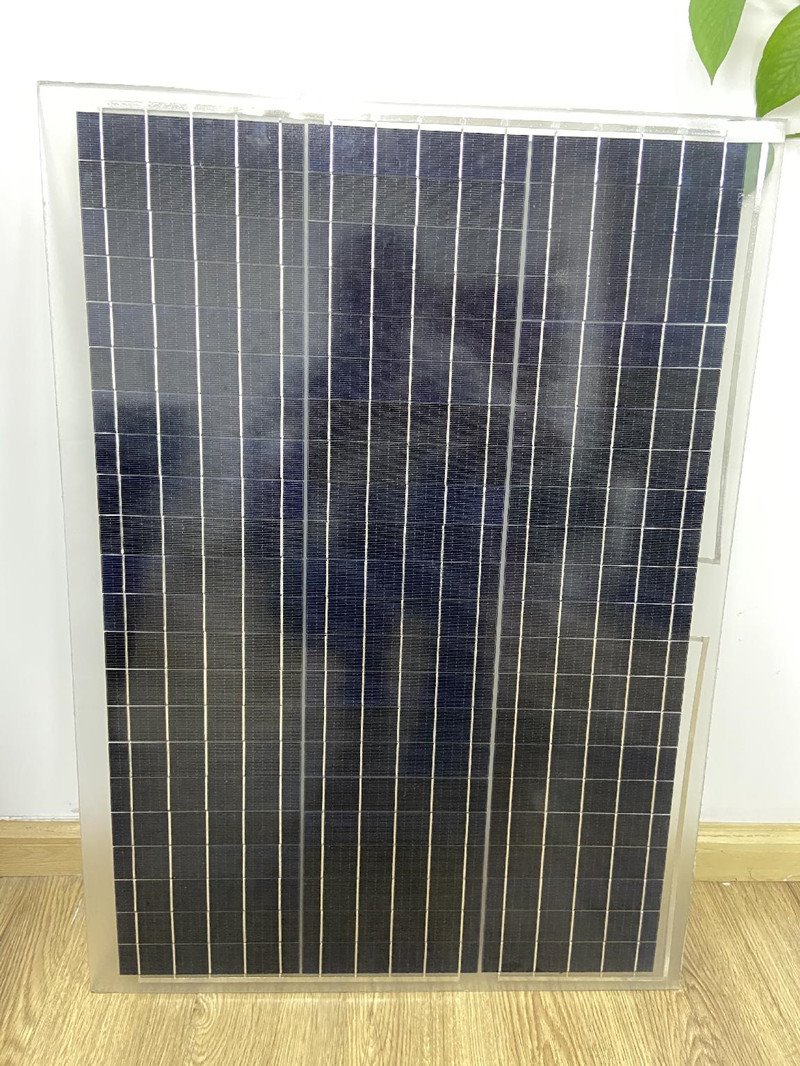
Now, moving on to DIY solar panels. Here’s the thing about solar panels: not all are created equal, and when you’re building a system for a fridge, you want panels that are reliable, easy to work with, and sized correctly. Most DIYers start with monocrystalline panels these days—they’re more efficient than polycrystalline, so they take up less space, which is a big plus for small to mid-sized systems. A typical 100-watt monocrystalline panel will put out around 400 Wh of energy per day if it’s getting 4 hours of peak sunlight (that’s the key term—peak sunlight is when the sun is strong enough to generate maximum power, usually between 10 a.m. and 2 p.m., and it averages out to about 4 hours a day for most places in the U.S., even on overcast days).
Wait, let’s do a quick math check here to make this concrete. Let’s say you have a new fridge that uses 150 Wh per day. If you get 4 hours of peak sunlight, a single 100-watt panel would generate 400 Wh per day. That’s more than enough to cover your fridge’s energy use, right? Well, not so fast—we have to account for losses. No solar system is 100 percent efficient. There’s loss from the wiring, the charge controller, the inverter, and even from dust or shade on your panels. Most DIY systems have around 20 to 30 percent total loss, so we need to add that back in. So 150 Wh plus 25 percent loss is 187.5 Wh per day. Still, that’s only about half of what a 100-watt panel generates. But wait—what if you live in a place with less sunlight? Like the Pacific Northwest, where peak sunlight might be 3 hours a day? Then a 100-watt panel would put out 300 Wh, minus 25 percent loss is 225 Wh, which still covers your 150 Wh fridge, no problem.
But here’s where most DIYers go wrong: they forget about the battery. Because solar panels only generate power when the sun is shining, your fridge needs power 24/7, so you need a battery bank to store the energy your panels make during the day to use at night and on cloudy days. That’s a non-negotiable part of an off-grid solar system, which is what you’d use to power a fridge. How big does the battery bank need to be? Let’s say you want to go two full days without sunlight (for example, a weekend of heavy clouds). Your fridge uses 150 Wh per day, so two days is 300 Wh. But batteries are deep cycle, and you should never discharge them more than 50 percent to keep them lasting for years. So you need a battery bank that can hold at least 600 Wh (double your daily use for two days) to avoid draining it too much. A 12-volt deep cycle battery rated at 100 amp-hours (Ah) will give you 1,200 watt-hours (since watts = volts x amps, so 12V x 100Ah = 1,200 Wh), so that’s more than enough—plenty of buffer, even.
Now, let’s talk about the other components you need for your DIY system, because you can’t just plug a fridge directly into a solar panel. First, a charge controller: this regulates the power coming from your panels to make sure you don’t overcharge your batteries, which would ruin them. For a small 100-watt panel system, a PWM (pulse width modulation) charge controller works, but if you want a bit more efficiency, an MPPT (maximum power point tracking) controller is better—especially if you have multiple panels. Next, an inverter: almost all fridges run on alternating current (AC) power, while solar panels and batteries run on direct current (DC) power. So you need an inverter that turns DC power from your batteries into AC power for your fridge. For a fridge with a maximum startup wattage of 1,000 watts, you’ll want a pure sine wave inverter rated at at least 1,500 watts. Modified sine wave inverters are cheaper, but they can damage sensitive electronics like fridge compressors over time—pure sine wave is worth the extra cost, trust me.
I’ve seen DIY systems that power fridges go wrong, and almost always it’s because someone skipped a step. Last year, a customer came to me with a system he built with two 50-watt panels, no battery, and a modified sine wave inverter, and his fridge died after three months. He thought he could plug his fridge straight into the panels during the day, but when the sun went down, it shut off, and the compressor cycled on and off too much, causing wear. Plus, the modified sine wave inverter was putting out wonky power that stressed the compressor. We fixed his system: added a 100Ah deep cycle battery, a pure sine wave inverter, and a third 100-watt panel for extra cloud cover buffer, and his fridge has been running perfectly for over a year now.
Another thing to consider: fridge size and efficiency. If you’re thinking about powering a full-size side-by-side fridge with a water and ice dispenser, that’s going to use more energy—maybe 300 to 400 Wh per day. For that, you’ll want two 100-watt panels, or one 200-watt panel, and a slightly bigger battery bank, like a 150Ah deep cycle battery. And if you have a chest freezer attached to the same system? Make sure you add its energy use too—most chest freezers use 100 to 200 Wh per day, so you’ll need to adjust your panel and battery size accordingly.
What about grid-tied systems vs. off-grid? If you’re still connected to the utility grid, you can also set up a system that powers your fridge and sends excess energy back to the grid, which can lower your electricity bill. But most DIYers who want to power their fridge with solar are looking for off-grid, so they don’t have to rely on the utility at all. For off-grid, reliability is key. That’s why I only supply high-quality panels and components to my customers—cheap knockoff panels might work for a few months, but they lose efficiency over time, which can throw off your energy calculations.
Let’s also talk about real-world examples, because numbers on paper can be confusing. I had a customer in rural Ohio who wanted to power his small cabin’s fridge and nothing else, so he built a system with two 100-watt monocrystalline panels, a 100Ah deep cycle battery, an MPPT charge controller, and a 1,500-watt pure sine wave inverter. His fridge is a 10-year-old top-freezer that uses 200 Wh per day. Even with Ohio’s shorter winter days (peak sunlight is about 2.5 hours a day in December), his system generates around 500 Wh per day, minus 25 percent loss is 375 Wh, which covers his fridge’s 200 Wh use, leaves extra energy for a few lights at night, and never drains the battery more than 50 percent. He hasn’t paid an electricity bill for his cabin in 18 months, and he texts me every now and then to say the fridge is running like a champ.
Of course, there are caveats. If you live in an area with very little sunlight, like Alaska in the middle of winter where peak sunlight might be less than an hour a day, you might need a bigger system—more panels, a larger battery bank, and even a backup generator for the darkest months. Also, if you have an old fridge that’s energy-hungry, replacing it with a newer, ENERGY STAR certified model will save you way more on solar costs than any system tweak. ENERGY STAR fridges use at least 10 percent less energy than standard models, so that’s a smart upgrade whether you’re going solar or not.
Now, what about the cost? That’s probably the next question you’re asking. A basic DIY system to power a fridge will cost between $500 and $1,200, depending on components. Let’s break it down: 2 x 100-watt monocrystalline panels ($200-$300 total), 1 x 100Ah deep cycle battery ($150-$250), 1 x MPPT charge controller ($100-$150), 1 x 1,500-watt pure sine wave inverter ($150-$250), wiring and mounts ($50-$100). That’s total of around $700-$1,100. Compare that to the average annual electricity cost for a fridge, which is about $70 to $100, so your system will pay for itself in 7 to 15 years, and then you’ll have free power for the life of your panels (which are rated for 25+ years of efficiency).
As a DIY solar supplier, I always tell my customers that powering a fridge with DIY solar is not only possible—it’s one of the most practical first projects for anyone getting into solar. It’s a single, high-use appliance, so sizing the system is straightforward, and you don’t have to power your entire home all at once, which is less overwhelming. That said, it’s not “set it and forget it.” You’ll need to do basic maintenance: clean your panels every few months, check your battery water levels if you have lead-acid batteries, and monitor your energy use if something seems off. I send all my customers a quick guide with troubleshooting tips, so even if you’re new, you won’t be stuck if something doesn’t work right away.
I’ve had people ask me, “Why not just hire a professional?” And you can, but a lot of DIYers enjoy the process of building something themselves, and saving money in the process. As long as you take the time to calculate your energy use correctly, pick quality components, and follow basic safety rules (never work on your system near water, disconnect batteries before wiring, wear safety glasses), you’ll be fine. I always tell new DIYers to start small—don’t try to power your whole house first; master powering your fridge, then add other appliances like lights, a laptop, or a small TV once you’re comfortable.
So, to circle back to the original question: Can DIY solar panels power a refrigerator? Yes, absolutely. But it takes careful planning, the right components, and a little bit of basic knowledge about how solar and refrigerators work. It’s not as hard as it sounds, and the payoff—no more worrying about fridge power during blackouts, lower energy bills, the satisfaction of building something with your own hands—is totally worth it.
If you’re ready to take the next step, or if you have questions about sizing your system, choosing the right panels for your location, or troubleshooting, I’m here to help. Building your own DIY solar system is a big decision, and I’m always happy to walk through your specific needs with you, no pressure, no sales tactics. Just send over your details, and we can chat about what will work best for you.
DIY Solar Panel Kits References
- U.S. Department of Energy. (2023). Refrigerator Energy Use Guide. Retrieved from energy.gov
- National Renewable Energy Laboratory. (2022). DIY Solar System Sizing and Component Recommendations. Retrieved from nrel.gov
- ENERGY STAR. (2023). Certified Refrigerator Energy Efficiency Standards. Retrieved from energystar.gov
- Deep Cycle Battery Manufacturers Association. (2021). Best Practices for Battery Bank Sizing in Off-Grid Solar Systems. Retrieved from dcbattery.org
- International Energy Agency. (2022). Global Solar Panel Efficiency Trends and Performance Data. Retrieved from iea.org
Ningbo Xufeng Solar Energy Co., Ltd.
As one of the most professional DIY solar panels suppliers in China, our products have good reputation in the market. Please rest assured to buy bulk premium DIY solar panels in stock here from our factory. For price consultation, contact us.
Address: No.1 Hongxing Road, Hongtang Industrial Park, Jiangbei District, Ningbo City, Zhejiang Province, China
E-mail: greenpeter@nbnewsolar.com
WebSite: https://www.nb-newsolar.com/
