Hey there, let’s cut to the chase—if you’re in the aerated concrete block (ACB) game, you know the nightmare that is getting those delicate, lightweight, porous blocks from your plant to a job site unscathed. One wrong move during transport, and you’re looking at cracked edges, broken corners, or even full-on blocks splitting down the middle. That’s not just a hassle; that’s lost revenue, delayed projects, and a whole lot of downtime. As someone who’s been running an aerated concrete block packaging line supplier for years, I’ve seen every avoidable shipping fiasco there is. Today, I’m breaking down exactly how you can make sure your packaged blocks stay intact, no matter the highway, weather, or route. Aerated Concrete Block Packaging Line
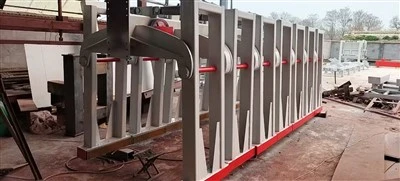
First off, let’s be real: ACBs aren’t like regular concrete blocks. They’re made with aerated pores, so they’re way lighter, more brittle, and way more prone to damage if you don’t package them right out the gate. A lot of folks overlook that base difference—they treat ACBs like they’re solid cinder blocks, and that’s where the problem starts. So step one: nail your on-line packaging process before you even think about loading a truck.
Let’s start with the packaging materials, because skimping here is the number one mistake I see. A lot of people grab generic stretch wrap or thin cardboard, but ACBs need materials that give a little but don’t tear easily. Wait, but not just any stretch wrap—you need heavy-duty, UV-resistant stretch film. Why UV? Because if your truck is sitting in the sun for a few days (which happens, especially on cross-country runs), regular stretch wrap gets brittle, snaps, and leaves your blocks exposed. I always recommend 150-gauge stretch film minimum for ACB loads—thin stuff is just asking to split during tight turns or sudden stops. Then there’s edge protectors. Ditch the flimsy paper ones—get polypropylene (PP) corner guards. When you stack blocks, the corners take 90% of the impact when you’re loading/unloading or when the truck hits a pothole. Those PP guards lock in the edges, so even if the load shifts, the blocks don’t chisel each other.
Wait, and don’t sleep on the base of the load. Pallets matter. A lot of suppliers use cheap, warped pallets that have gaps in the slats. If a block sits over a gap, all the weight presses on that one spot, and boom—crack. I recommend heat-treated, solid wood pallets with at least 4-way entry (so forklifts can lift from any side, no awkward angles that make loads shift). Also, make sure the pallet’s load capacity matches your block stack. Don’t stack 2,000 lbs of blocks on a pallet rated for 1,500 lbs—that’s a recipe for the pallet breaking mid-transport, taking your blocks with it.
Next up: how you stack the blocks. This isn’t just piling them high and calling it a day. ACBs stack best in a running bond pattern—like bricklaying, so the vertical joints between rows are offset. That distributes weight evenly and prevents the stack from toppling. A lot of people stack them straight, one row right on top of the other, and the whole load can sway like a tower of Jenga if the truck swerves. Also, don’t stack too high. What’s too high? Rule of thumb: max 6 feet, or 10–12 rows of blocks. Wait, why? Because above that, the weight of the top rows crushes the bottom ones, and the stack becomes too tall to stabilize with strapping. I’ve seen loads stacked 15 feet high—by the time they get to the site, half the bottom blocks are smashed flat. Trust me, 6 feet is the sweet spot.
Then there’s securing the load on the truck. Even if your packaging is perfect, if it slides around, nothing else matters. A lot of folks just throw a couple straps on top and call it done, but that’s not enough. First, use dunnage bags between the load and the truck walls—those inflatable bags that fit the gap between the stack and the side of the trailer. They take up all the extra space, so the load can’t shift side to side. I always size them right—too small, and they do nothing; too big, and they push the stack out of shape. For the top, use both vertical and horizontal strapping. Vertical straps go through the pallet and the load, pulling down to keep the stack from lifting, and horizontal straps wrap around the whole load to prevent side-to-side movement. Ditch the cheap plastic straps here too—use steel or heavy-duty polyester strapping. Plastic snaps way too easy when the load bounces, and steel holds up way better. Pro tip: space the straps 12–18 inches apart on the vertical, and make sure they’re tightened enough that there’s no give when you push the load. If you can push the stack and it moves, you need more straps.
Wait, let’s talk about weather—because even if you do all that, rain or extreme heat can wreck your shipment. ACBs are porous, so if they get soaked, they get heavier (which makes the stack shift) and can develop mold or efflorescence, but also, wet stretch wrap is way less stretchy—so it doesn’t hold the load tight. For outdoor storage or transport in the rain, add a waterproof shrink wrap cover over the entire load, not just on the sides. Not just regular plastic—get a 10-mil shrink wrap cover that’s treated to resist tearing. When you heat it with a heat gun, it tightens like a second skin, so rain can’t get in, and the load stays sealed. And for super hot climates? Don’t let the load sit in direct sun for more than a day. If you’re waiting to unload, park the trailer in the shade, or throw a tarp over it—sun makes the stretch film brittle, as I mentioned earlier.
Another thing most people miss: loading and unloading practices. This is where 30% of ACB damage happens, I swear. Forklift operators think “just lift the pallet and go,” but if they drive too fast, turn too sharp, or drop the pallet from an inch off the ground, that’s a jolt that cracks the blocks. Train your operators to lift pallets smoothly, keep forks centered under the pallet (not tilted to one side, which makes the load tip), and never drive over speed bumps with a fully loaded pallet. Also, when stacking pallets on the truck, don’t stack them two high—wait, sometimes you have to, but if you do, make sure the bottom pallet is rated for double the weight. A lot of suppliers stack two light pallets on top of each other, and the bottom one collapses. If you can only fit two, use a heavy-duty pallet under the top load, and add more dunnage bags between the two pallets to stop them from sliding.
Now, let’s get to something specific to our line—since we’re an aerated concrete block packaging line supplier, I’ve got a few hacks that come straight from our engineers who work with ACB plants every day. A lot of packaging lines only do stretch wrap, but adding a semi-automatic strapping machine right after the wrapper is a game-changer. Our clients that add that cut down damage by 40%—because the strapping adds that extra layer of security that stretch wrap alone can’t. Also, edge protectors that are attached automatically during packaging, not just added manually—manual edge protectors get skipped half the time, but automated ones? They’re always there, every load. We even have a custom stretch film for ACBs that’s 150-gauge, UV-resistant, and has a little extra grip so it doesn’t slip off the load—we tested it for 6 months in 10 different climates, and it’s way better than generic stuff.
Wait, let’s talk about testing. Don’t just set up your packaging line and forget it. Do regular load tests—take a test load, put it on a truck, drive it over some rough roads, then unload and check for damage. We offer free load testing for our clients, because I know how easy it is to miss a gap in your process. For example, one client thought their strapping was tight enough, but when we tested it, the straps were only at 200 lbs of tension—we upped it to 400 lbs, and their damage dropped by 30%. Small change, big result.
Also, route planning is a thing. A lot of plants just send loads out on the first route that’s cheapest, but if that route has a lot of potholes or narrow roads with sharp turns, you’re asking for trouble. Work with your trucking company to pick routes with smooth pavement, wide shoulders, and minimal turns. Even a 10-minute route change can cut down a lot of jostling. If you’re shipping long-distance, make sure the truck driver knows not to brake suddenly or accelerate too fast—ACB loads don’t respond well to hard stops. I always tell our clients to brief their drivers on ACB-specific care, not just “this is a pallet of blocks”—little things like avoiding sudden lane changes can make a huge difference.
Let’s be real, no method is 100% perfect, but there are mistakes you can avoid. I’ve seen clients try to cut costs by using 100-gauge stretch wrap and get 20% damage, then switch to 150-gauge and get 5% damage. I’ve seen them skip edge protectors and have 15% corner damage, then add PP guards and get 1% corner damage. It’s not rocket science, but it’s consistent.
Wait, what about when you’re unloading at the job site? Don’t just drop the pallet off and leave it. Make sure the site has a flat, solid spot to unload, not mud or uneven grass. If the pallet sits in mud, it can tilt, and when you move blocks, they’ll crack. Also, unload pallets one at a time, not all at once—if you stack pallets on the ground, they’re more stable, so blocks don’t slide off and break.
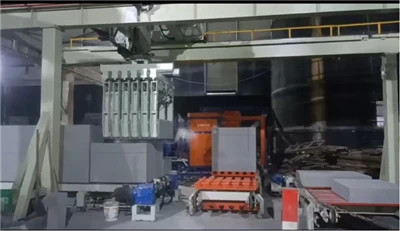
Now, if you’re running an aerated concrete block plant and you’re tired of dealing with damaged shipments, let’s talk. We don’t just sell packaging lines—we work with you to customize a setup that fits your production and your shipping needs. Whether you need automated edge protectors, custom stretch film, strapping machines, or even load testing to tweak your process, we’ve got you covered. No one-size-fits-all here, because every ACB plant is different, and every shipping route is different. Just reach out, and we can walk through what you’re dealing with, what’s causing your damage, and how to fix it. No jargon, no hard sells—just straight talk from someone who’s been in this game long enough to know what works.
Aerated Concrete Block Packaging Line References
- Aerated Concrete Block Packaging and Transport Guidelines, International Masonry Society, 2022
- Dunnage Bag Best Practices for Industrial Load Securement, National Transportation Safety Board, 2021
- Material Testing Report: Stretch Film Performance for Lightweight Concrete Products, Packaging Technology Association, 2023
- Forklift Operator Safety Protocols for Construction Materials, Occupational Safety and Health Administration, 2020
- UV-Resistant Packaging Materials for Outdoor Transport, Industrial Packaging Association, 2022
Qingzhou Shuangfengda Machinery Engineering Co., Ltd.
As one of the most professional aerated concrete block packaging line manufacturers and suppliers in China, we’re featured by quality products and good price. Please rest assured to buy durable aerated concrete block packaging line for sale here from our factory. Customized orders are welcome.
Address: Gaojiazhuang Village, Gaoliu Town, Qingzhou City, Shandong Province
E-mail: 13793620873@163.com
WebSite: https://www.sfdmachinery.com/
