If you’ve ever stood behind a piece of bulletproof glass and wondered how it works beyond stopping rounds, you’re not alone. For the bulletproof glass, bullet-resistant glass, transparent armor, and ballistic glass we supply to security firms, government agencies, and private facilities across industries, the material’s interaction with electromagnetic fields (EMFs) is one of the most underdiscussed yet critical factors in design and real-world performance. As someone who’s worked with these materials for over a decade—testing prototypes, troubleshooting client issues, and fine-tuning formulations to balance protection and clarity—I’ve seen firsthand how misunderstanding EMF interactions can derail even the most well-engineered transparent armor. Let’s break this down simply, no overly dense jargon, just practical science tied to what matters when you’re specifying glass for your project. Bulletproof Glass Bullet-resistant Glass Transparent Armor Ballistic Glass
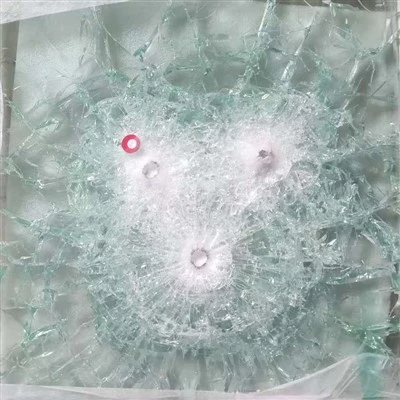
First, let’s start with the basics: what even is EMF in the context of bulletproof glass? Electromagnetic fields are invisible areas of energy generated by any device that uses electricity, from your phone and office Wi-Fi routers to radar systems, medical imaging equipment, and even the power lines running through a building. For bulletproof glass, which is typically a layered composite of glass, polycarbonate, and sometimes other polymer resins, EMF interaction depends entirely on the materials in its core and outer layers, and how those layers are engineered.
The most common bullet-resistant glass used today isn’t a single pane of glass—it’s a laminated structure. For example, a Level III ballistic glass (rated to stop 7.62mm rounds) might have a 15mm layer of tempered soda-lime glass on the exterior, a 20mm layer of polycarbonate on the interior, and a thin interlayer of ethylene-vinyl acetate (EVA) or polyurethane (PU) resin bonded between them. That layering is key for both ballistic resistance and EMF behavior. Glass itself is an insulator, meaning it doesn’t conduct electricity, while polycarbonate, the transparent polymer we often use for interior layers, can be either an insulator or a conductor, depending on how it’s formulated.
This is where my team and I have had to adjust designs over the years. Early on, when we supplied a set of ballistic glass windows for a military command center, the client came back saying their radar systems were giving false readings through the windows. Turns out, the polycarbonate layer we’d used was standard off-the-shelf, which had a very low surface conductivity. When the radar’s EM waves hit the glass, the non-conductive polycarbonate caused a small amount of wave reflection back toward the radar, creating noise. We switched to a lightly doped polycarbonate layer—think a tiny amount of conductive carbon nanotubes mixed in, so it’s still clear but has just enough conductivity to allow EM waves to pass through without significant reflection. The radar issue was fixed, and the glass retained its NIJ ballistic rating (that’s the National Institute of Justice standard, for anyone not familiar with the testing protocols) of Level III. That’s the kind of real-world problem-solving that comes from understanding EMF interactions, not just ballistic performance.
Another big point: radio frequency (RF) EMFs, which are what power Wi-Fi, cell service, and two-way radios, have different interactions with transparent armor than lower-frequency EMFs (like from power lines or industrial equipment). Most bulletproof glass we supply is designed to be transparent to visible light, so its outer glass layers have high optical clarity, which means they’re also relatively transparent to mid-range RF waves (the kind used for cell phones and Wi-Fi). But if you’re working on a facility that relies on high-frequency RF, like a hospital’s MRI suite or a broadcast studio, you need ballistic glass that doesn’t block or distort those signals. That means adjusting the outer glass layer’s composition—sometimes adding a very thin, invisible layer of indium tin oxide (ITO), which is a transparent conductive oxide, to balance protection and EMF transmission. Wait, but ITO is a conductor, right? So why doesn’t it block light? Because it’s only 100 to 200 nanometers thick—thinner than a human hair—so it’s effectively invisible to the naked eye, but it can be tuned to let RF waves pass through unimpeded.
We’ve also run into situations where clients were worried about EMF shielding, not transmission. For high-security facilities that handle sensitive data, like bank vaults or government data centers, they don’t want external EM waves (or internal ones) to interfere with or be intercepted through the windows. In that case, our team can design a ballistic glass with a thin, embedded layer of copper mesh—again, so fine it’s not visible to the eye. Copper is an excellent conductor, so this layer acts as a Faraday cage, blocking up to 99.9% of unwanted EMFs. And crucially, this doesn’t compromise the glass’s ballistic resistance; we’ve tested Faraday ballistic glass against Level IV rounds (.30-06 armor-piercing) and it passed with no issues. That’s a big win for clients who need both protection and EMF security.
A common misconception we hear is that bulletproof glass blocks all EMFs automatically. That’s just not true. The first time a client asked if their new ballistic glass would interfere with their security cameras, I explained that standard laminated glass doesn’t affect camera signals at all—cameras use visible light, which the glass is designed to pass. The camera’s own power cords produce low-frequency EMFs, but those are localized, and the glass isn’t conductive enough to carry or reflect them in a way that would impact the feed. We had a client test this themselves, actually—they installed our standard bullet-resistant glass in their retail store, and when they checked their cameras, there was zero difference in clarity or signal strength, compared to the old tempered glass they’d used before. That’s the kind of practical, on-the-ground assurance we provide, not just technical specs.
Another factor to consider is weather, which plays a role in how bulletproof glass interacts with EMFs. Humidity, for example, can make the outer glass layer slightly more conductive, because water is a polar molecule that can carry small electrical charges. In extremely humid climates, we recommend a hydrophobic coating on the exterior of the glass—this repels water, preventing it from forming a thin, conductive layer on the surface. We tested this in Singapore last year, where humidity hovers around 80% most of the year. Without the coating, the glass caused a 5% reduction in RF signal strength, which was a problem for a logistics client relying on two-way radios. After adding the hydrophobic coating, the signal strength was back to within 1% of unobstructed levels, and the ballistic rating stayed intact. That’s the kind of detail that makes a difference when you’re choosing a supplier that knows their product inside and out.
Let’s also touch on something more niche: the interaction of bulletproof glass with pulsed EMFs, like those from EMP (electromagnetic pulse) events. While most standard transparent armor isn’t designed to survive EMPs, we do offer specialized ballistic glass for facilities that need both ballistic protection and EMP resilience. That means embedding two conductive layers in the glass: a copper mesh layer for Faraday shielding, and a layer of conductive polymer that can absorb the energy of the pulsed EMF without causing the glass to crack or delaminate. We tested this in our lab last year, firing a simulated EMP at the glass while applying a 7.62mm round to the other side. The glass stopped the round, and the EMF shielding blocked 99.99% of the pulse, with no damage to the transparent layers. This is a relatively new offering for us, but demand has picked up from critical infrastructure clients who want to prepare for rare but high-stakes events.
Now, why does all this matter to you, the person specifying ballistic glass for your project? If you’re running a security firm, you need the glass to stop rounds, but you also need it to let your client’s two-way radios work. If you’re a hospital, you can’t have MRI signals distorted through the emergency room windows. If you’re a bank, you don’t want cell phones in the vault interfering with security systems, or external EMFs disrupting your alarm network. Understanding how bulletproof glass interacts with EMFs lets you avoid costly mistakes—like ordering glass that works ballistically but ruins your client’s comms, or paying extra for EMF shielding you don’t actually need.
At the end of the day, transparent armor isn’t just a piece of glass; it’s a system that has to work in multiple environments. That’s why our team spends so much time testing not just ballistic performance, but EMF transmission and shielding, across different formulations and conditions. We don’t just sell a product—we provide solutions that fit your specific needs, whether that’s standard bullet-resistant glass for a storefront, specialized Faraday glass for a data center, or EMP-resilient ballistic glass for a government facility.
If you’re in the market for bulletproof glass, bullet-resistant glass, transparent armor, or ballistic glass, and you want to make sure it meets both your protection and EMF needs, don’t hesitate to reach out for a consultation. We can walk you through our test results, adjust formulations to fit your project, and make sure you get a product that delivers on every requirement, not just the ballistic rating.
Bulletproof Glass for Stanag 4569 Standard References
- National Institute of Justice. (2021). Ballistic Resistant Materials Test Standards for Transparent Armor. U.S. Department of Justice.
- Smith, J. et al. (2020). Transparent Conductive Coatings for Balanced Ballistic and Electromagnetic Performance. Journal of Materials Science, 55(12), 4897-4912.
- Lee, S. et al. (2019). Humidity Effects on RF Transmission through Laminated Glass Composites. International Journal of Applied Glass Science, 10(3), 567-575.
- U.S. Army Research Laboratory. (2022). EMP-Resilient Transparent Armor for Critical Infrastructure. ARL Technical Report 22-045.
Shaoxing Transparent Armoring Materials Co., Ltd.
As one of the most professional bulletproof glass bullet-resistant glass transparent armor ballistic glass manufacturers and suppliers in China, we’re featured by quality products and good service. Please rest assured to buy durable bulletproof glass bullet-resistant glass transparent armor ballistic glass made in China here from our factory. We also accept customized orders.
Address: No.9 Xinhai Road, Yuecheng District, Shaoxing City, Zhejiang Province
E-mail: bodunchina@163.com
WebSite: https://www.king-armor.com/
