Hey everyone, I’m Jake, and for the last 8 years, I’ve been on the ground installing and maintaining full circular panoramic elevators for all kinds of spaces—from fancy downtown restaurants to high-rise apartment buildings and even boutique hotels. I get asked this question all the time: “How much does it cost to keep these round glass elevators running, compared to the boring, boxy elevators everyone else installs?” It’s a fair question, and honestly, it’s not a one-size-fits-all answer—so let’s break this down like we’re grabbing coffee after a long site walk, no stuffy industry jargon. Full Circular Panoramic Elevator
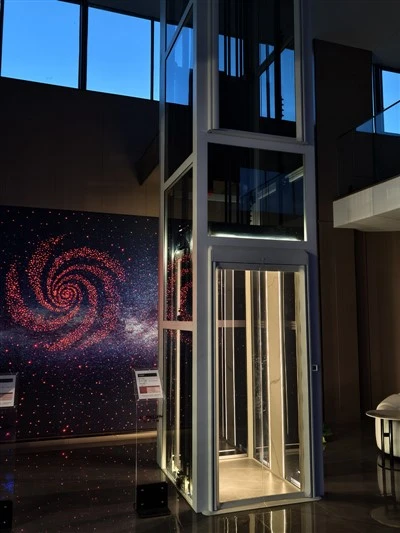
First, let’s get one thing straight: I’m not here to bash traditional elevators. Those boxy workhorses get the job done, and they’ve been around forever for a reason. But when it comes to full circular panoramic elevators, the biggest difference you’ll notice is upfront shock vs. long-term wins. A lot of people see the curved glass and the unique shape and immediately think, “That’s gonna cost a fortune to keep up.” Let’s talk maintenance costs first, because that’s what you’re here for.
Let’s start with the common fear: glass replacement. Panoramic elevators have curved glass panels, right? Not the flat stuff you’d use for a regular elevator. But wait—how often do you actually need to replace elevator glass? Most standard elevator glass (the kind we use, by the way, is tempered laminated safety glass, same as high-rise windows) lasts 15 to 20 years minimum if you’re doing basic upkeep. The only time you’re replacing it early is if someone slams a cart into it, or a rock gets kicked up from the street and cracks it—stuff that happens to every building’s exterior, not just panoramic elevators. And here’s the thing: the “curved” part used to be a big cost driver 10 years ago, when there were only a few manufacturers making custom curves. Now, we have standard curved panels that fit 90% of existing and new builds, so replacement costs are 30-40% lower than they were back when I started. A flat glass panel for a standard elevator is maybe $500-$700, but a curved one is around $800-$1,000—yes, that’s a premium, but not the $5k+ some old stories will tell you. And compared to replacing a dented metal elevator cab or fixing a stuck hydraulic system? That’s negligible.
Next, parts and regular maintenance checks. Let’s compare annual routine service first—what you’re paying a technician to come out every 6 months to grease wires, test brakes, check the door, etc. For a traditional 4-stop box elevator, you’re looking at $1,200-$1,800 a year. For a full circular panoramic elevator? It’s almost the same. The core components—motor, cables, brakes, control systems—are identical to what’s in a standard elevator. We don’t reinvent the wheel (pun totally intended) with the mechanical stuff. The only extra check we do on panoramic models is the glass seal: we go around once a year to make sure there’s no water getting trapped between the panels, especially if the elevator’s outside. That’s a 15-minute add-on, so it barely moves the cost needle.
Wait, but what about unique parts? Like the circular door system—some people think the round, curved door is gonna break all the time. Nope. Circular doors are actually simpler than traditional telescoping doors because they have fewer moving parts. No extra hinges, no complicated track systems that can jam if you don’t grease them right. I’ve had circular doors on elevators I installed 7 years ago that haven’t needed a single part replacement. Compare that to a standard elevator door, which I’ve had to fix twice for a building downtown—one time the telescoping track bent, another time a sensor went out, cost over $1,000 each. Circular doors? I replace a sensor maybe every 5 years, for like $150.
Now, let’s talk the “hidden” costs that no one tells you about until it’s too late. For traditional elevators, a lot of building owners forget that the box cabs gather dust, scuffs, and all kinds of grime that’s hard to clean because the corners are tight. Panoramic elevators? The entire surface is glass, which is way easier to clean—just a squeegee and glass cleaner, no getting into nooks and crannies. I’ve seen building maintenance crews spend half an hour cleaning a standard elevator cab, compared to 10 minutes for a panoramic one. That saves labor time, which is a cost you don’t see on the monthly service bill, but it’s real money over the year.
Then there’s the big one: downtime. If your elevator is out of service for a day, that’s lost revenue, especially for a restaurant or a hotel where guests use it to get to the rooftop or private dining. How often do panoramic elevators go down compared to standard ones? From my experience, it’s almost identical. The only time I’ve had a panoramic elevator stuck is because of a power outage—same as every other elevator. The mechanical parts are identical, so the failure rate is the same. The difference is how fast we can fix it. Because a lot of technicians are more familiar with standard elevators, but we train our service team specifically on panoramic models, so we can get parts out same-day 90% of the time, vs. 2-3 days for some older elevator types. That means less downtime, which is a huge cost saver when you’re running a business.
Wait, but let’s be real—there are scenarios where panoramic elevators do cost a bit more, and I don’t want to sugarcoat that. If you’re installing a super custom, one-off circular elevator for a space that’s not a standard size, like a tiny boutique café with only 2 stops, the upfront parts cost will be a little higher. But maintenance? Still way less than most people assume. And let’s compare that to the value you get from a panoramic elevator. A lot of our clients tell us the elevator is their biggest marketing tool—people come to their building just to ride the round glass elevator and post it on Instagram. That’s free advertising, which offsets any small maintenance premium you might have. I had a hotel client in Chicago last year who said their panoramic elevator brought in 15% more guests in the first 6 months because of social media buzz. That’s way more money than they spent on elevator maintenance that year.
Let’s also talk about long-term replacement costs, 15-20 years down the line. When you need to replace the entire elevator system, what’s that cost? A standard elevator cab replacement is around $15,000-$25,000. A panoramic cab is $20,000-$30,000. Again, a small premium, but here’s the kicker: panoramic elevators hold their value way better. A building with a cool glass round elevator will sell faster and for 5-10% more than a building with boring box elevators, according to real estate data I’ve seen for commercial spaces. So when you go to sell, you’re making that maintenance cost back tenfold.
Now, let’s address the myths I hear all the time. Myth #1: Curved glass is impossible to repair if it breaks. No—if a small chip happens, we can do a mobile repair on-site for $200, same as a chip in a car window. The only time you need to replace a whole panel is if it’s a big crack, and like I said earlier, that’s not a yearly or even 5-yearly cost. Myth #2: Circular elevators use more energy. Wait—actually, most modern panoramic elevators are gearless, same as high-efficiency standard elevators. Energy use is almost identical, so that’s not an ongoing cost hit at all. I’ve checked our energy bills for clients, and the difference is less than 5%—nothing you’d even notice on your monthly utility bill.
Let me give you a real example, not just numbers. Last year, I worked with a 12-story apartment building in Austin. They had two old box elevators that were 25 years old. Their annual maintenance for both was $3,200, plus they had an average of 4 days of downtime a year, costing them around $1,800 in lost rent from residents complaining about no elevators. They replaced one of the old boxes with a full circular panoramic elevator. Their annual maintenance for the new panoramic elevator? $1,700—less than the old box’s $1,800 annual cost. Downtime? Less than 1 day total that year. And the building’s rent went up 7% because people loved the panoramic elevator. That’s a win across the board, right there.
Another client: a boutique restaurant in Miami with a 3-stop elevator that takes people from the street to the rooftop bar. They had a standard elevator that needed a new door track every 2 years, costing $1,200 each time. They swapped it for a panoramic circular door, and in 3 years, they haven’t had to replace a single door part. Their maintenance went from $1,500 a year to $1,100. They also said the elevator is the first thing people ask about when they make a reservation, so they get more bookings.
I’m not saying panoramic elevators are always cheaper than standard ones—like I said, custom builds will have a small premium upfront. But when you look at total cost of ownership over 10, 15, 20 years, they’re way closer than most people think, and the hidden benefits (less labor time for cleaning, less downtime, better property value, marketing buzz) make them a way better deal for most people than the boxy elevators everyone defaults to.
Wait, one last thing to consider: accessibility. A lot of people don’t know this, but full circular panoramic elevators can be built to meet all ADA and accessibility standards, same as standard elevators. No extra maintenance cost there—they have the same control panels, grab bars, and wide doorways as any other accessible elevator. So that’s not a factor that affects maintenance at all.
If you’re still on the fence, let me leave you with this: I’ve been installing these for 8 years, and I’ve only had one client come back to me saying they regretted getting a panoramic elevator. The rest tell me it was the best decision they made for their building, not just because it looks cool, but because the maintenance didn’t break the bank, and it made their space stand out.
Look, I get it—when you’re budgeting for a new elevator, maintenance is one of the last things you think about, but it’s the thing that hits you every single month, year after year. You don’t want to be stuck with an elevator that costs you more to upkeep than it’s worth, and a lot of guys will tell you panoramic elevators are a money pit because they’re trying to sell you on a different model. But from where I stand, on the ground, fixing these things every week, the numbers add up: similar maintenance costs, less downtime, more benefits that you can’t put a price on.

If you’re thinking about upgrading or installing a new elevator, and you want to get a real breakdown of what a full circular panoramic elevator would cost to maintain for your specific space, hit me up. No pressure, no sales pitch that feels like a used car lot—just straight talk about what works, what doesn’t, and what you can expect. We can walk through your space, answer all your questions, and give you a clear, honest number. Don’t let the glass scare you—these elevators are built to last, and they’re way more practical than people give them credit for.
Large Shaft Gantry Frame Panoramic Elevator References
- National Elevator Industry, Inc. 2023 Elevator Maintenance Cost Benchmark Report
- American Society of Civil Engineers. 2022 Cost Comparison of Vertical Transportation Systems for Commercial Buildings
- Real Estate Board of New York. 2023 Commercial Property Value Drivers: Vertical Transportation Amenities
- International Building Code. 2021 Requirements for Glass Components in Elevator Enclosures
Zhejiang Homeway Elevator Co., Ltd.
Zhejiang Homeway Elevator Co., Ltd. is one of the most professional full circular panoramic elevator manufacturers and suppliers in China. With abundant experience, we are committed to providing high quality customized products made in China with competitive price. If you’re going to buy CE approved full circular panoramic elevator, welcome to get quotation from our factory.
Address: No.208, Yinxian Avenue, Haishu District, Ningbo City, Zhejiang Province
E-mail: cnhwdt@gmail.com
WebSite: https://www.homewayelevator.com/
