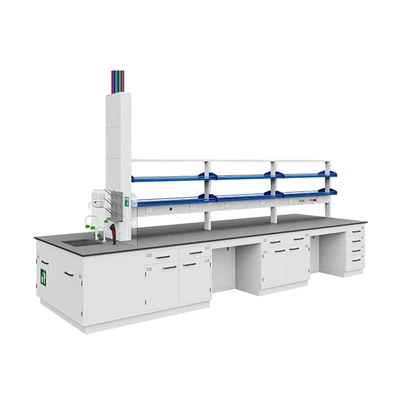
Lab Chair and Stool Let’s cut to the chase—if you’re setting up a lab, whether it’s a tiny university teaching lab, a pharma R&D space, or a custom biotech startup, your lab table isn’t just a piece of furniture. It’s the workhorse that holds your beakers, your NMR samples, your PCR machines, and all the (very expensive) gear you can’t afford to replace. As someone who’s been supplying lab tables for over a decade—talking to postgrads who’ve spilled 95% ethanol on a $2k table, to lab managers pulling 12-hour days troubleshooting a broken table mid-experiment—I’ve seen way too many teams skip key features to save a buck, only to regret it within a year. So let’s break down the actual, non-bullshit features that make a good lab table, no corporate jargon allowed. First up, the tabletop. This isn’t a kitchen counter you got from Home Depot. I’ve seen acrylic tops warp under 50°C water baths, laminate peel after a few acid spills, and solid wood rot when someone forgets a wet beaker overnight. The best tabletops? Wait for it—chemical-resistant solid grade epoxy resin. Not the cheap stuff that comes pre-mixed with filler, but the 100% pure, high-build epoxy that cures to a non-porous, seamless surface. Why seamless? Because no gaps mean no hidden crumbs, no where bacteria or chemical residues can hide (huge for bio labs or cleanrooms). It’s heat-resistant up to like 350°F, so you can set a hot autoclaved rack or a dry bath straight down without worry. And it wipes clean in 10 seconds with a paper towel and ethanol—no scrubbing, no stained marks. I know some guys swear by stainless steel, but let’s be real: scratch marks from glass pipettes are a thing, and if you’re doing cell culture, those tiny scratches can trap contaminants. Epoxy wins here hands down, unless you’re in a metalworking lab or something super specific that needs steel. Next, the base and frame. This is the part that holds all your stuff, so it needs to be sturdy enough to not wobble when you’re centrifuging samples at full speed. I once had a client call me panicking because their old table swayed so bad during a Western blot run that their membrane ripped. The fix? A heavy-gauge steel frame, not the thin, hollow tubing that bends if you lean on it too hard. Also, adjustable legs are non-negotiable. Labs are rarely perfectly level floors—think old university basements with uneven concrete, or startup labs on the third floor of a old building where the floor slopes. Adjustable levelers let you tweak each corner so your centrifuge sits balanced, no spilled samples mid-run. Bonus points if the legs have a quick-release feature—perfect for when you need to move the table to rearrange the lab, or deep clean the undercarriage (gross, I know, but necessary). Now, storage. Oh man, storage is where most labs mess up. Either they have zero drawers, or too many tiny ones that don’t fit a 1L bottle of ethanol. First, think about what you’re storing: do you need lockable cabinets for hazardous chemicals? Drawers of different sizes for pipettes, paper towels, and lab notebooks? Open shelving for the stuff you use every day? The best lab tables offer a mix—customizable storage, not one-size-fits-all. And those drawers? They need soft-close glides. Nothing is more annoying than slamming a drawer at 8 PM after a long day, only to break the glide and have to replace the whole drawer. Also, avoid particleboard for storage components—moisture from spilled water or ethanol will make it swell and crumble within a year. Use solid plywood or powder-coated steel for cabinets and drawer boxes. Another thing: counterweight. If you’re adding a hanging shelf or a big piece of gear like a fume hood insert, you need the frame to have built-in counter support so it doesn’t tip. I’ve seen a $10k HPLC system get destroyed because a table couldn’t handle the weight— that’s a way bigger loss than a few extra dollars in a sturdy frame. Wait, let’s talk about modularity. Labs change all the time. A startup might start with 3 researchers, then add 5 more in a year. A university might switch from organic chem to biotech and need different gear. Modular lab tables let you add or remove sections, adjust the height, or swap out tabletops if you’re switching uses. Adjustable height is actually a big one I almost forgot. Sit-stand lab tables are game-changers for postgrads pulling 10-hour days. You can crank it up while you’re doing a long titration, lower it while you’re pipetting, no more back pain from hunching over a table that’s the wrong height. A lot of cheap lab tables have fixed heights, which is a huge oversight—lab work isn’t one-size-fits-all for height. Now, the small (but make-or-break) details that most suppliers skip. First, edge protection. Sharp corners on lab tables are a recipe for spilled chemicals and bumped heads, especially in tight labs where you’re carrying beakers or boxes of samples. Rounded, thick edges (not the thin, flimsy ones that chip after a month) are a must. Also, drip grooves around the edge of the tabletop. If you spill a beaker of water or ethanol, it runs off the groove instead of pooling on the table and seeping into the frame or storage. That’s a tiny feature that saves so much hassle later. Then there’s chemical resistance for all parts, not just the tabletop. Drawer pulls, hardware, even the back panel of the table—all of it needs to be able to handle occasional acid, base, or solvent spills. Powder-coated steel for hardware is way better than chrome, which can corrode if you spill HCl on it. And for bio labs, the surface needs to be non-toxic, no off-gassing that could mess with cell cultures—low-VOC epoxy is non-negotiable here, not the cheap epoxy that smells like chemicals for weeks after installation. Wait, let’s be honest, I’ve heard a lot of people argue about price. I get it, lab budgets are tight—grant money doesn’t grow on trees, startup founders are watching every dollar. But buying a cheap lab table that warps after 6 months, or wobbles during experiments, or traps contaminants, is a false economy. Let’s do the math: a $500 cheap table vs a $1200 high-quality epoxy table. If the cheap table makes you spill a $5000 HPLC sample, or forces you to shut down a project for a week while you wait for a replacement, that’s way more money lost than the difference in table cost. I’ve had clients come back to me after 2 years, ready to replace those cheap tables they bought elsewhere, because of all the headaches. Now, let’s talk about customizations, because every lab is different. If you’re a chemistry lab, you might need an integrated sink or a gas line cutout in the tabletop. If you’re a cleanroom, you need tables that can be easily sanitized, no seams that collect dust. If you’re a teaching lab, you might need tables that are easy to clean and durable enough for undergrads who don’t always treat gear gently. A good lab table supplier will ask you specific questions: what chemicals will you be working with? What gear are you putting on the table? Do you have uneven floors? How many people will use the table, and for what? They won’t just sell you a standard table and send you on your way. Let’s get real about common mistakes I see labs make. One: buying tables that are too small for their gear. A 6-inch HPLC might fit on a table, but if you need room for a waste beaker and a sample rack too, you need at least 3 feet of space, not 2. Two: skipping lockable storage. If you’re working with controlled substances, or just don’t want your lab notebooks disappearing, lockable cabinets are non-negotiable. Three: ignoring weight capacity. Centrifuges, dry baths, and autoclave racks are heavy—make sure the table is rated for that specific weight, not just a generic "heavy-duty" label. Four: forgetting about serviceability. If a drawer glide breaks, or a leg leveler gets stuck, you don’t want to have to replace the whole table. Good suppliers offer parts that you can swap out easily, no need for a custom order. So, putting it all together: a good lab table isn’t just a place to set stuff. It’s a tool that supports your experiments, keeps your samples safe, saves you money in the long run, and adapts to your lab as it grows. If you’re setting up a new lab, or replacing old tables that are causing headaches, don’t cut corners here. You’re trusting this table with your hard work, your samples, and your grant money. A few years ago, I had a postgrad from a small biotech come to me, frustrated because their old tables had a gap between the tabletop and the cabinet, so every time they spilt buffer, it dripped down into the storage and made all their pipette tips moldy. We swapped them out for tables with seamless epoxy tops and drip grooves, and she told me later that small fix saved them $10k in ruined reagents and samples in just a year. That’s the stuff that matters. If you’re in the market for new lab tables, don’t settle for whatever the big-box lab supply store pushes. Ask the right questions: what’s the tabletop made of? Is it seamless and non-porous? What’s the weight capacity? Is storage customizable? Do they offer adjustable legs and sit-stand options? And if you’re not sure what you need, hit me up—we can walk through your lab’s specific needs, no sales pressure, no hidden fees. We don’t do one-size-fits-all here, because your lab is unique, and your table should be too. Lab Tables

References
- Laboratory Science. Modern Lab Bench Design: Key Considerations for Safety and Functionality. 2022.
- Occupational Safety and Health Administration (OSHA). Laboratory Workspace Design Guidelines. U.S. Department of Labor, 2021.
- American Society for Microbiology. Cleanroom and BioSafety Lab Equipment Standards. 2020.
- National Institute of Standards and Technology (NIST). Weight Capacity and Structural Integrity Requirements for Laboratory Furniture. 2019.
HAMECC(Shanghai) Lab Solutions Co., Ltd.
We’re well-known as one of the leading lab tables manufacturers and suppliers in China, featured by quality products and good price. Please rest assured to buy customized lab tables made in China here from our factory.
Address: Building 1, No. 2222, Huancheng Road, Jiading District, Shanghai
E-mail: info@hamecc.com
WebSite: https://www.hamecc.com/
