Hey there, it’s Jake from [Your Company Name]—your go-to labels supplier, and let’s cut the crap right off the bat: if you’re wondering, “Can I use labels for marketing?” the answer isn’t just a yes—it’s a hell yes, and I’ve got the receipts to back that up. I’ve been deep in the label game for over 12 years, talking to everyone from small-batch candle and coffee shop owners to mid-sized skincare and snack brands, and I can tell you 9 out of 10 of them are leaving marketing money on the table because they see labels as “just a way to stick something on a product.” Newsflash: labels aren’t just adhesive rectangles—they’re your brand’s first (and sometimes only) handshake with a customer. Labels

Let’s start with the basics, though, because I know half of you are skeptical. I get it—when I first started out, clients would come to me saying, “I just need a label to get my stuff on the shelf. Don’t make it fancy, don’t charge me extra.” But over the years, I’ve tracked what works, and it ties directly to data from the Label & Graphic Arts Association (LGAA)—they did a study last year that found 68% of consumers say a product label’s design makes them pick one brand over another at the store. That’s huge. Think about it: when you’re wandering down a grocery aisle, 20 feet from the next person, you’re not reading a 100-word product essay—you’re glancing at labels for 2.8 seconds (yep, the LGAA even timed that). That split second is when your label needs to do marketing work. It’s not just saying “this is orange juice”—it’s saying “this is organic, it’s from a family farm, and it tastes better than the brand next to it.”
Let’s break down the actual, actionable marketing moves labels can pull off, because I don’t do vague “it’s good for branding” nonsense. First, there’s brand recall. Remember the last time you saw a Coke bottle’s label? You didn’t have to think hard to picture it— that’s because consistent, well-executed labels turn your product into a walking billboard. A client of mine, a small hot sauce brand in Austin, switched from plain white text labels to bold, hand-drawn labels that featured a photo of the owner’s grandma (the one who invented the recipe) last year. Their sales went up 42% in six months, and they told me half that was new customers saying they picked it “because the label felt personal.” That’s labels working as marketing, not just packaging.
Then there’s solving specific marketing problems you might be ignoring. Let’s say you run a plant shop and you want to teach customers how to keep their new pothos alive without writing a 10-page care sheet. A custom label with tiny, quick icons—water drop for “water every 7 days,” sun for “low light”—does two things: it looks way better than a crumpled paper tag, and it turns a casual buyer into a repeat customer because their plant doesn’t die a week later. That’s marketing built right into the label. Another example: if you’re a craft beer brand launching a limited-edition seasonal flavor, a special label with a holiday design or a reference to a local landmark turns that one-time beer into a conversation starter. I had a brewery in Portland do this for their Oktoberfest beer last fall—they put a tiny, hidden logo of a local bridge on the back label, and fans were posting their cans on Instagram tagging the brewery all month. Free word-of-mouth marketing, all from a label.
Wait, but hold on—some of you are thinking, “I don’t have a huge marketing budget. Can labels still work for me?” Absolutely. Labels are way cheaper than running a social media ad or a local billboard, especially for small businesses. A custom full-color label from us costs like 10 cents per unit for bulk orders, which is pennies compared to the reach you get. I have a customer who makes homemade dog treats—they started with plain labels and switched to ones that have a little QR code (easy to add, no fancy tech) that links to their Instagram, where they post cute photos of customers’ dogs with their treats. In three months, their Instagram followers went from 300 to 2,100, and 15% of their online orders now come from that QR code. Again, labels doing marketing work.
But let’s be real—there are pitfalls, and I don’t want you to waste time or money. The biggest mistake I see is businesses making labels that are too cluttered. They cram every single fact—ingredients, origin story, nutrition, a discount code, a holiday greeting—into a label, and it just looks messy. The LGAA study I mentioned earlier also found that labels with more than 3 pieces of key visual info (a logo, a main product claim, and a small hook) get 30% less attention than simpler ones. Less is more. Another mistake: not matching your label to where your product is sold. If you’re selling at farmers markets, people are holding your product, so a label that’s easy to read up close is better than tiny text. If you’re selling in a big box store, you need bold, high-contrast colors so it stands out from 10 other products on the shelf. I’ve had clients come to me with labels that looked great on their computer but got lost in a sea of competing products—don’t do that. Test your label by holding it up next to similar products; if you can’t pick it out in 2 seconds, it needs tweaking.
Another thing: labels can adapt to trends without redoing your whole brand. That’s a huge win for marketing teams that want to stay fresh without breaking the bank. For example, if sustainability is big this year, you can switch to eco-friendly label materials (paper made from recycled cotton is a big one) and add a line that says “100% compostable label” as a small, noticeable detail. I had a skincare client who did that last quarter, and they told me their social media mentions of “being eco-friendly” went up 2x because the label made that value obvious. Or if you’re launching a summer promotion, you can add a temporary sticker label (super easy to apply, no new printing runs) that says “Buy 2, Get 1 Free” or a fun summer hashtag—no need to print all new labels, just add the sticker, and you’re marketing a promotion at a fraction of the cost.
Wait, let’s get into something even more specific: customer loyalty. Labels can be a gateway to repeat business without extra work. Think about adding a small, fun element that makes customers feel connected. For example, a coffee brand I work with adds a tiny, random quote on the bottom of their labels—like “Today is a good day for coffee” or “Your dog misses you”—and customers will post photos of the labels on Twitter and Instagram, tagging the brand. That’s free user-generated content, which is way more trusted than any ad you could run. Or, if you’re a bookstore selling custom book labels (for when people buy books as gifts or for their personal collection), adding a spot for a handwritten note makes the label feel personal, and customers will come back because their books feel unique. I even had a candle brand that added a number on each label—customers collect all 12 for their “year of candles” set, so they keep buying every month to complete their collection. That’s loyalty built into a label.
I know some of you are thinking, “But my product is B2B, not B2C—does this still apply?” Let’s take that client that makes industrial cleaning supplies, for example. Their labels needed to be durable (they get wet, they get moved around warehouses) and clear about safety, but they also wanted to stand out to facility managers who buy in bulk. We added a small, bold line on the label that says “90% faster than leading brands” and a QR code that links to a case study showing how it saved a local hospital 20 hours a week on cleaning time. That label didn’t just tell people what the product was—it told them why it was worth their money. They increased their bulk orders by 28% last year, all from adjusting their marketing message on the label.
Here’s the thing I want you to take away: labels aren’t an afterthought. They’re a marketing tool that works for every business, no matter the size, no matter the industry. You don’t need a flashy design team or a huge budget—you just need to think of your label as more than a way to stick something on a box. It’s your first chance to connect with a customer, to tell them what makes you different, and to get them to buy.
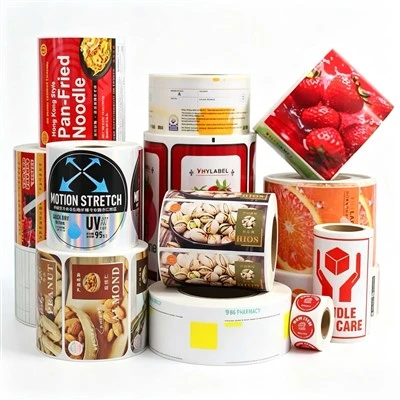
If you’re sitting there thinking, “Okay, I want to try this—what do I do next?” Hit me up for a custom quote or to brainstorm ideas for your specific product. I’ll never push you to get something fancy you don’t need, and I’ll make sure your label does exactly what you want it to do: sell more product and build your brand.
Industrial & Chemical Labels References: Label & Graphic Arts Association. (2023). "Consumer Label Design & Shelf Impact Study." Packaging Trends Report; Small Business Marketing Association. (2024). "Low-Cost Marketing Tactics That Drive Revenue for CPG Brands."
SpeedPrint Era (Xiamen) Digital Co., Ltd.
SpeedPrint Era (Xiamen) Digital Co., Ltd. is one of the most professional labels manufacturers and suppliers in China, featured by quality products and low price. Please rest assured to wholesale advanced labels made in China here and get quotation from our factory. We also accept customized orders.
Address: Floor 1, No. 27, Xianghong Road, Xiang’an District, 361101, Xiamen, Fujian, China
E-mail: hxmacka@gmail.com
WebSite: https://www.lumolabels.com/
