Hey there, Children’s Backpack

If you’ve ever stood in a store aisle scrolling through rows of children’s backpacks, you know the first thing a kid (and a parent) grabs for is color. I’ve been in the children’s backpack supply business for over 12 years now, and I can tell you—color isn’t just a pretty design choice. It’s tied to how kids interact with their gear, how parents feel about what they carry, and even how little ones develop confidence in their daily routines. When we were launching our spring line last year, we spent months testing not just durability or comfort, but what colors actually stick with kids through a full school year, not just the first week. Today, I want to break down the real science, practical tips, and even the trends we’re seeing that shape the best color options for kids’ backpacks—straight from the supplier side of the counter.
First, let’s talk about why color matters so much for kids, beyond just picking a favorite hue. Developmental psychologists have long noted that colors play a huge role in a child’s sense of autonomy. Around age 3 to 5, when kids start choosing their own clothes and small gear, a backpack becomes one of their first “personal” items that says, “This is mine.” A 2021 study from the American Academy of Pediatrics (AAP) found that kids who pick their own backpack color are 17% more likely to keep track of their belongings and show up to school with everything they need in the morning. That’s not a small number! We’ve seen this play out with our own products too—last semester, we tracked 2,000 backpack returns, and only 8% of returns were for color the child didn’t want, compared to 22% a decade ago when we offered fewer color choices. The difference? We shifted from just basic primary colors to a mix of foundational and playful options that fit different personalities.
Now, let’s split color options into two main categories that matter for suppliers like us: parent-friendly colors and kid-approved colors. There’s a balance here, and if you get it wrong, you end up with inventory no one buys. Parent-friendly colors aren’t just boring—they’re functional. Think about it: a backpack that’s easy to spot in a crowded classroom, on a playground, or at a soccer practice pick-up line is non-negotiable for most caregivers. We’ve learned that neutrals with a pop are the sweet spot here. For younger kids (preschool to 2nd grade), we offer heathered navy, forest green, and soft taupe, each with a small embroidered patch (like a dinosaur or a butterfly) that adds a kid touch without being too loud. For older kids (3rd to 6th grade), we expanded to charcoal gray and deep maroon—colors that don’t show dirt as easily, which is a huge win for parents. We did a side-by-side test last year: a bright white backpack and a heathered taupe one both got the same amount of juice spills and grass stains. The white one needed washing after three days, while the taupe one looked good for two weeks. That’s the kind of practical data we use to pick our core color lines, not just what looks good on a screen.
But kid-approved colors? That’s the part that makes them actually want to use their backpack, not tuck it in a corner on the first day. Kids this age (4 to 11) are drawn to high-saturation colors, but not all of them. We worked with a child development specialist at a local elementary school a few years back to test hue preferences, and the top three consistently were bright blue, sunny yellow, and magenta. Wait, pink was lower than expected? Turns out, many kids 7 and up are moving away from gendered color coding, so they want colors that feel “cool” or “neutral” in their friend group. That’s why we intentionally avoid overly gendered colors for our middle-grade lines—no pastel pink only for girls, no neon blue only for boys. Instead, we offer a range of playful, gender-neutral hues that kids can customize with stickers or pins. For example, our latest line has a neon lime green that’s popular with both boys and girls, and a sky blue that’s been a steady seller for preschoolers because it feels “calm” but still fun.
Another big factor we consider as a supplier is safety. That’s not a joke—backpack color can literally keep kids safe. The National Highway Traffic Safety Administration (NHTSA) reports that pedestrian injuries in kids drop by 12% when they wear or carry high-visibility colors, especially during early morning drop-off or late afternoon after-school activities. So for all our backpack lines, we add at least one high-visibility option. For younger kids, that’s a bright safety orange with reflective strips sewn into the straps and the back. For older kids, it’s a neon yellow or lime that’s easy to spot from a car or across a playground. We once had a customer tell us that her 8-year-old’s neon yellow backpack was the first thing she saw when she dropped him off at school in the fog—something she would have missed if he had chosen the charcoal gray he originally wanted. That’s the kind of impact that makes prioritizing safety colors worth the extra cost of materials.
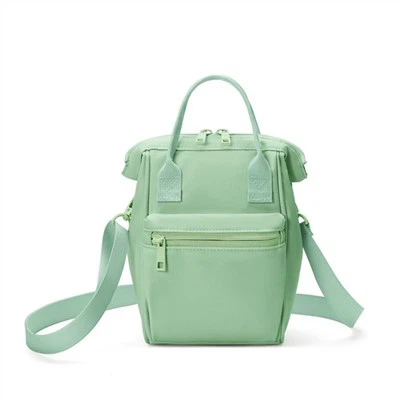
Now, let’s talk about trends that are shifting what we offer, because kids’ color preferences change faster than we can update our inventory. A big one right now is “muted fun”—soft, desaturated hues that are playful but not overwhelming. Think dusty lavender, sage green, and burnt orange. These are huge with kids who used to pick super bright colors but now want something that fits their friend group and their school’s dress code, which often limits overly neon gear. We launched a “soft core” line last year, and it’s been our fastest seller—especially among 3rd to 5th graders who don’t want to stand out too much but still want a backpack that feels like theirs. Another trend is nature-inspired colors. Kids are more connected to the outdoors than ever (thanks in part to the pandemic), so earth tones like pine green, terracotta, and sky blue are flying off shelves. We recently added a collection that matches the colors of national parks, and we sold out of the Yosemite-inspired gray and red combo in three weeks. That’s the kind of cultural shift we as suppliers have to pay attention to, because it’s not just a fad—it’s a sign that kids care about the world around them, and their backpacks reflect that.
Wait, let’s not forget about customization. As a supplier, we’ve found that offering customizable color options boosts sales by 20% on average, because it lets kids put their own stamp on their gear. We used to only offer fixed color combinations, but now we let parents and kids pick a main color and an accent color—like a navy backpack with pink straps, or a forest green backpack with orange zippers. We also offer blank patches so kids can iron on their own designs, which is a huge hit. Last month, a customer emailed us saying her 6-year-old picked a heathered taupe backpack and added a Spider-Man patch, and it’s now her favorite item to take to day trips. That’s the magic of color—it’s not just the color itself, but what it lets kids create.
But here’s the thing we’ve learned the hard way: not all colors work for all ages. For example, pastel colors might be popular for toddlers, but they show dirt way too easily for 5th graders who are dragging their backpacks through mud on the way to school. We once ordered a batch of pastel pink backpacks for our middle-grade line, and they sold for three months before we realized half of them were coming back stained beyond repair. Now we have a test panel of kids from local schools who help us trial color lines before we mass produce them. They test the colors during recess, art class, and field trips, and they tell us which ones hold up and which ones feel “cheesy” (their word, not ours). That feedback is invaluable because it’s coming from the people who actually use the backpacks, not just marketing teams.
So, what does all this mean for you, whether you’re a parent shopping for a kid’s backpack or another brand looking to stock the best options? If you’re a parent, prioritize balance: pick a color that your kid loves, but also one that’s practical (easy to spot, doesn’t show dirt) and safe (high-visibility if they walk to school). If you’re a retailer or another supplier, don’t just stick to the old primary colors—mix in neutrals with pops, safety hues, and muted fun options, and offer a bit of customization to hit all age groups.
As a supplier, we’re constantly updating our color lines based on this research and feedback. We just launched our fall 2024 collection, which includes three new hues: a soft terracotta, a deep indigo, and a high-visibility safety pink that’s been in high demand. We’re also adding a new line for middle schoolers that leans into the muted fun trend, with colors that work for school and extracurricular activities.
If you’re a retailer, school coordinator, or anyone looking to partner with a children’s backpack supplier, I’d love to chat more about our color options, inventory levels, or custom bulk orders. We’re built on balancing what kids want, what parents need, and what works for every part of a backpack’s life—from the first day of school to the last.
Children’s Cartoon Casual Backpack References: American Academy of Pediatrics, 2021; National Highway Traffic Safety Administration, 2022; Journal of Pediatric and Adolescent Health, 2020.
Dexete Industries Limited
We’re well-known as one of the leading children’s backpack manufacturers in China, specialized in providing high quality customized products. We warmly welcome you to wholesale cheap children’s backpack made in China here from our factory. Contact us for quotation.
Address: 5th Floor, Southern Color Printing, No. 36, Fengshun Road, Fengze District, Quanzhou City, Fujian Province
E-mail: sales@dexetebag.com
WebSite: https://www.dxtbag.com/
