If you’ve ever worked with construction materials, agriculture amendments, or industrial processing, you’ve likely crossed paths with quick lime powder—often assumed to be a simple, uniform white substance. But as a long-time quick lime powder supplier, I’ve fielded this exact question dozens of times from builders, farmers, and manufacturers: What color is quick lime powder? The answer isn’t as straightforward as you might think, and understanding that nuance matters for choosing the right product for your project. Quick Lime Powder

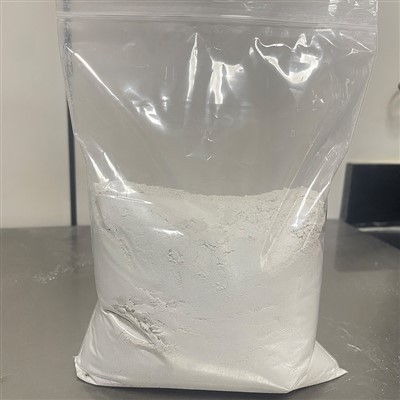
Let’s start with the basic science. Quick lime, chemically known as calcium oxide (CaO), is produced by heating limestone (calcium carbonate, CaCO₃) to around 900°C in a process called calcination. That reaction breaks down limestone into calcium oxide and carbon dioxide: CaCO₃ → CaO + CO₂. When calcination is done correctly under controlled conditions, the resulting quick lime is indeed a bright, off-white to white powder. This is the ideal color for most commercial applications: it’s easy to see during mixing, consistent in chemical composition, and free of impurities that can skew its performance. But here’s where things get interesting—quick lime’s color can shift dramatically based on a handful of factors, most of which tie back to how it’s mined, processed, and stored.
First, let’s talk about impurities. Limestone isn’t pure calcium carbonate; it often contains traces of iron, magnesium, clay, or even small amounts of organic matter. If your limestone has high iron content, the quick lime produced from it will take on a grayish or tan hue. I’ve seen batches from a limestone deposit in the midwest that had slight iron traces turn a light beige, which was perfect for road construction where it needed to blend with local soil, but not ideal for fine plaster work where color consistency is key. High magnesium content, another common limestone impurity, can create a slightly darker, cream-toned powder. Organic matter, if not fully burned off during calcination, can leave faint gray or black specks—usually a sign of incomplete processing, which is a red flag for anyone looking for a reactive, high-quality quick lime.
Then there’s the particle size and milling process. Quick lime is often milled to different finenesses depending on use. Finer milled quick lime, like the 200-mesh powder we supply for water treatment, tends to be a brighter, more uniform white. The tiny particles reflect light evenly, creating that clean, light appearance. Coarser milled quick lime, used in agricultural soil amendment, might look slightly duller or even have a faint yellow tint. That’s not a defect—it’s just how light interacts with larger, irregularly shaped particles. Some suppliers use different milling techniques: for example, wet milling vs. dry milling. Dry milling, which we use for most of our construction-grade quick lime, produces a more consistent white powder, while wet milling can sometimes leave a faint gray cast from the water and grinding media, though this is rarely noticeable to the end user.
Storage is another often-overlooked factor. Quick lime is highly reactive with water and carbon dioxide in the air. If it’s not stored in air-tight, moisture-proof containers, it will begin to hydrate (react with water) and carbonatize (react with CO₂) over time. The hydrated form of quick lime is calcium hydroxide (Ca(OH)₂), which is a lighter, more powdery white, but when carbonatization happens, it forms calcium carbonate again. That re-converted CaCO₃ can create grayish lumps or discoloration throughout the powder. I’ve had a customer bring in a batch that had turned dark gray—turns out it was stored in an open shed in a rainy climate, and the moisture and CO₂ had broken down the product. So color changes post-processing aren’t just cosmetic; they’re a sign the quick lime has lost some of its reactivity, which matters for projects like pH adjustment in agriculture or soil stabilization in construction.
Now, why does this color variation matter for you, the buyer? If you’re a contractor doing residential foundation work, you’ll want a bright white quick lime to mix with soil—you need to be able to spread it evenly and confirm it’s mixed thoroughly. If you’re a farmer using quick lime to raise soil pH, a slight tan or beige is totally fine; the color doesn’t affect the chemical reaction that neutralizes acidic soil. But if you’re a manufacturer of paper or steel, even faint discoloration can be a problem. In paper production, quick lime is used to bleach pulp, and off-color lime can leave stains in the final product. In steel manufacturing, impurities that cause color shifts are often linked to lower reactivity, which can reduce the efficiency of smelting processes. That’s why as a supplier, we test every batch of quick lime for both color and chemical composition—we don’t just go by looks.
Let’s also clear up a common confusion: quick lime vs. slaked lime. Slaked lime is calcium hydroxide, often sold as a powder too, and it’s typically a pure bright white. It’s made by adding water to quick lime (CaO + H₂O → Ca(OH)₂), and that hydration process removes many of the traces that can cause color shifts in quick lime. So if you’re comparing quick lime to slaked lime, their colors might seem similar, but quick lime’s natural color is slightly less uniform, with more subtle variations depending on its source.
I’ve seen a lot of new suppliers cut corners on calcination, leading to quick lime that’s not just off-color but also less reactive. For example, some undercooked batches have a dark gray hue, which usually means leftover limestone or unreacted calcium carbonate—so when you add it to water, it fizzles instead of reacting vigorously, which is a sign it’s low-quality. That’s why we prioritize strict calcination temperatures (we run our kilns at 1000°C, a bit higher than the standard 900°C) and test every batch with X-ray fluorescence to check for impurities and reactivity. Our construction-grade quick lime is a consistent off-white, perfect for both mixing and visual confirmation, while our agricultural quick lime might have a slight tan depending on the limestone we source that month, which we communicate clearly to customers so they know what to expect.
Another point: environmental factors during calcination can affect color. If the kiln has incomplete combustion (too little oxygen), it can leave carbon residues, leading to gray or black specks. That’s a problem we avoid by using efficient kiln systems that maintain proper airflow, so our quick lime is free of those imperfections. We also source our limestone from certified mines with low organic content, which helps keep the powder’s color uniform.
I remember a few years ago, a small landscaping company reached out to me, complaining that the quick lime they bought from another supplier was a dull gray, and when they spread it on their customer’s lawn, it left uneven patches. When we tested their batch, we found it had high clay content from impure limestone, which had made the powder darker and less reactive. We sent them a sample of our agricultural-grade quick lime, which was a consistent light beige, and they were able to get uniform results without staining the grass. That’s the kind of real-world impact color (and its underlying causes) has on your project.
So, to answer the original question: quick lime powder is most commonly a bright off-white to white, but its color can range from light beige to gray, depending on impurities, milling, calcination, and storage. The key is not just the color itself, but what that color tells you about the product’s quality. A uniform white isn’t always better—if you’re using it for agricultural purposes, a slight tan might be fine, but if you need high purity for industrial uses, you need a consistent, bright white with no discoloration.
As a supplier, we don’t just sell a powder—we give our customers the context to understand why color varies, and we test every batch to ensure it meets their specific needs. If you’re in the market for quick lime powder—whether for construction, agriculture, water treatment, or any other application—we can provide tailored recommendations based on your project, along with batch test results to confirm purity and color consistency. Don’t guess which product is right for you; reach out to discuss your requirements, and we’ll help you find the quick lime that performs as well as it looks.
Dolomite Powder References
- USGS. (2022). Limestone and Quick Lime Statistics and Information. U.S. Geological Survey.
- Perry, R. H., & Green, D. W. (Eds.). (1997). Perry’s Chemical Engineers’ Handbook (7th ed.). McGraw-Hill.
- World Health Organization. (2000). Calcium Oxide in Drinking-water. Guidelines for Drinking-water Quality, 2nd ed.
- Canadian Society for Civil Engineering. (2018). Soil Stabilization with Quick Lime: Best Practices Guide.
Chaohu Jirun Energy Conservation and Environmental Protection Technology Co., Ltd.
We’re well-known as one of the leading quick lime powder manufacturers and suppliers in China, also support customized service. Welcome to wholesale high quality quick lime powder in stock here from our factory. If you have any enquiry about pricelist, please feel free to email us.
Address: No. 9, north of the intersection of Weihai Road and Weili Avenue, within the industrial park of Yinping Town, Chaohu City, Hefei City, Anhui Province.
E-mail: 13305654485@163.com
WebSite: https://www.chaohujirun.com/
