Hey everyone, thanks for dropping by my blog—quick heads up, I’m the guy who runs a band saw machine supply company, so most of what I write here is from real, hands-on stuff I’ve picked up working with fab shops, metal manufacturers, and even small custom metal builders over the last 12 years. Today’s question comes up all the time: can a band saw machine be used for cutting zirconium? Let’s dive into this, because it’s not a straight yes or no—there’s a lot of nuance here that people miss, especially when they’re working with this weird, high-performance metal I’ve seen more of in aerospace and medical parts lately. Band Saw Machine
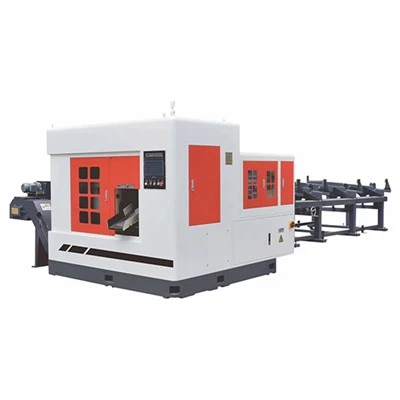
First, let’s get one thing out of the way: zirconium isn’t your average mild steel or aluminum. It’s a transition metal, right? Super strong, corrosion-resistant, and has this weird, almost silvery-white sheen when it’s milled. But it’s also ductile enough to be tricky if you don’t use the right tools. A lot of guys I talk to think, “Hey, my old band saw works for steel, it’ll work for zirconium too.” Nope—zirconium’s properties will mess with your saw blades and your cut quality if you don’t adjust things properly.
Let’s start with why band saws can actually cut zirconium, if you set them up right. Band saws are awesome for this because they make continuous, smooth cuts (especially contour cuts, which you might need for custom zirconium parts) and they’re way more flexible than a chop saw or a circular saw for odd shapes. I’ve watched a customer of mine who builds medical implants cut thin zirconium plates for hip replacements on a horizontal band saw all the time—his setup works perfectly. The key here isn’t just the saw, it’s the blade and the cutting parameters.
Wait, let’s talk about the blade first, because that’s the make-or-break part. Most people grab whatever blade they use for their toughest steel, but zirconium needs something specific. I recommend bimetal blades first—high-speed steel teeth on a carbon steel body, right? Not the cheap carbon blades, those will dull in 5 minutes on zirconium. But even not all bimetal blades are the same. You want a fine to medium tooth count. For thin zirconium (like 1/8 inch to 1/2 inch), go with 10-14 teeth per inch (TPI). For thicker stock (like 1 inch or more), drop it to 6-10 TPI. Why? Too few teeth will hook and bend the ductile zirconium, too many will clog up with metal chips. Also, make sure the blade has a positive rake angle—this helps grab the zirconium cleanly without tearing, which is a big issue with softer, ductile metals like this.
Next, the saw itself. Not all band saws are equal here. A cheap benchtop band saw from a big box store? Probably not going to cut it for zirconium, especially thicker stock. You need a band saw with enough power—at least 1.5 HP for thin stock, 2 HP or more for thicker zirconium. Why? Because zirconium has a higher tensile strength than aluminum (around 330 MPa, compared to aluminum’s 270 MPa) so it needs more torque to push the blade through. Also, the saw needs to have a solid, rigid frame. If the saw wiggles when you make a cut, you’ll get rough edges, blade breakage, and even heat buildup that can mess with the zirconium’s properties. Zirconium can get brittle if it overheats, right? That’s a thing—so heat control is huge here.
Speaking of heat, that’s another big one people overlook. When you cut zirconium, friction from the blade and the metal itself generates heat fast. If you don’t cool the cut zone, two bad things happen: first, the blade dulls way faster, and second, zirconium can go through a phase change at high temps (around 862°C, I think?) where it becomes less ductile, so your cut parts might crack or be useless. So you need a proper coolant system—not just water, but a soluble oil or synthetic cutting fluid made for high-performance metals. I’ve seen guys use old motor oil as a cheap hack, but that’s messy and doesn’t cool nearly as well. The coolant also flushes away chips, which prevents clogging the blade teeth.
Wait, what about vertical vs horizontal band saws? Let’s clarify that. Horizontal band saws are way more common for cutting solid zirconium billets or plate—they’re stable, you can clamp the stock tight, and you get a straight, consistent cut. Vertical band saws are better for contour cuts, like if you need to cut a custom shape for a aerospace bracket. I’ve had a customer who does custom aircraft parts use a vertical band saw with a fine blade for cutting zirconium profiles, works like a charm as long as they adjust the feed rate.
Now, let’s get into the mistakes I see people make all the time when trying to cut zirconium on a band saw. First, too fast a feed rate. Zirconium isn’t steel—you can’t push it through the saw as fast. If you feed too hard, the blade will overheat, bend, or break. I tell my customers to start with a feed rate of around 0.01 inches per minute per tooth, then adjust up or down based on how the cut looks. If you see blueing on the cut edge, you’re feeding too fast—slow down. If the blade is chipping teeth, you might be feeding too slow, or have the wrong TPI.
Second, not clamping the stock properly. Zirconium is strong, but when the blade is pushing through it, if it moves even a little, you get a wandering cut, or the blade can snag. I always recommend using a vise with soft jaws (aluminum or brass) so you don’t mar the zirconium surface—scratch marks can be a big deal for parts that need to be polished or meet medical/aerospace specs.
Third, using a worn blade. Even if you buy a good bimetal blade, if it’s dull from cutting steel or aluminum, it’s not going to work on zirconium. Replace blades regularly, and inspect them before every job—look for chipped teeth, bent teeth, or any sign of wear. A bad blade is the #1 reason I get calls from guys saying their band saw won’t cut zirconium.
Wait, what about thinner stock? Like foils or very thin zirconium sheet? I’ve seen people use a scroll saw for that, but a band saw works too—just use an even finer TPI, like 14-18, and make sure the stock is clamped tight so it doesn’t vibrate. Vibration on thin stock will cause the blade to drift, which is a pain for precision cuts.
Let’s talk about a real example from last month. A guy named Mike runs a small metal fab shop in Detroit, does custom parts for a local medical device company. He came to me because his old band saw (a 1 HP benchtop) couldn’t cut 1/2 inch zirconium plate—blade kept breaking, cuts were rough. We swapped him to a 2 HP horizontal band saw, gave him a 10 TPI bimetal blade, and showed him how to set up the coolant system. A week later he texted me a pic of perfect cuts, said he’s been using it daily and the blade is still holding up. That’s exactly the kind of thing I love seeing—when the right setup makes a job that was frustrating easy.
Now, is there any case where a band saw shouldn’t be used for zirconium? Well, if you’re cutting super thin foil (like less than 1/32 inch), maybe a laser cutter is better for ultra-precision, but a band saw works fine for most commercial or industrial cuts. If you’re cutting extremely thick zirconium (like 6 inches or more), you might need a bandsaw with a heavier duty motor, but even then, if you adjust the blade and feed rate, it works. I’d also say if you don’t have the right coolant, or your saw is super old and not rigid, maybe look into other tools, but for most people, a properly set up band saw is totally sufficient.
Another thing: zirconium chips. Important to note here—zirconium is a reactive metal, and its fine shavings can be flammable if they’re dry and hot. That’s why the coolant isn’t just for heat, it’s also for safety. Never let zirconium chips build up dry in your saw or work area—dispose of them properly, and make sure the coolant is flushing them away. I always tell customers to have a dedicated container for zirconium chips, not mix them with other metal shavings, because of the fire risk. That’s a big safety point most people don’t think about when cutting this metal.
Wait, let’s circle back to the band saw side of things. As a band saw supplier, I see a lot of guys assuming they need a whole new machine just to cut zirconium, but that’s not true. Most mid-range band saws can handle it with a few simple changes: blade type, TPI, feed rate, and coolant. The only time you need a more specialized saw is if you’re doing extremely heavy or precision work for aerospace, but for 90% of applications, a solid band saw will do the job.
Let me sum this up so it’s easy to follow: yes, a band saw machine can absolutely be used for cutting zirconium—you just have to do it right. Skip the cheap blades, make sure your saw has enough power and rigidity, use the right coolant, adjust your feed rate, and clamp your stock properly. Avoid the common mistakes: too fast feed, wrong blade, no coolant, loose stock. And don’t forget the safety thing with the chips, that’s non-negotiable.

If you’re reading this and you’re trying to cut zirconium but running into issues, or you’re in the market for a band saw that can handle this (and other tough metals) without the hassle, hit me up. I’ve helped dozens of shops get set up for zirconium cutting, and I can walk you through exactly what you need—no sales pressure, just real advice from someone who’s been in this game for years. Don’t waste time and money on the wrong setup, let’s get you cutting clean, consistent zirconium parts with a band saw that works for you.
Conventional Circular Saw Machine References:
- Kalpakjian, S., & Schmid, S. R. (2014). Manufacturing Processes for Engineering Materials. Pearson Education.
- Materials Properties Database. (2023). Mechanical and Thermal Properties of Zirconium. Retrieved from industry technical resources on metal machining.
- ASM International. (2021). Cutting Tool Applications for Non-Ferrous Metals. ASM Handbook, Vol. 16: Machining.
Shanghai Loginfly Sawing Technology Co., Ltd.
As one of the most professional band saw machine manufacturers and suppliers in China, our products have good reputation in the market. We warmly welcome you to wholesale premium band saw machine from our factory. If you have any enquiry about cooperation, please feel free to email us.
Address: Room 506 NO.655 Yinxiang Road,Nanxiangtown,Jiading District, Shanghai.China
E-mail: sales01@loginfly.com
WebSite: https://www.loginflysaws.com/
